How Malaysia classifies hospital information systems
The Ministry of Health (MOH) Malaysia categorizes HIS into three tiers based on hospital size and scope:
| Category | Full Name | Hospital size | Scope |
|---|---|---|---|
| THIS | Total Hospital Information System | 400+ beds | Fully paperless; most complete integration |
| IHIS | Intermediate Hospital Information System | 200-400 beds | Partial integration; growing module set |
| BHIS | Basic Hospital Information System | Under 200 beds | Core admin + clinical functions |
Hospital Selayang was one of the first to implement Total Hospital Information System in Malaysia, a landmark case that digitized clinical, administrative, and financial workflows for thousands of staff and patients daily. Cerner has served as the core vendor for THIS at certain tertiary hospitals, including Hospital Sultan Ismail.
Knowing which tier applies to your facility is the right first step before evaluating any vendor.
What a HIS must cover for Malaysian hospitals
Core modules (non-negotiable)
- Electronic Medical Records (EMR) / EHR – Eliminates paper-based records and enables instant retrieval. Not sure which one your facility needs? See EMR vs EHR vs PHR explained.
- Outpatient and Inpatient Management – Scheduling, bed management, queue management
- Pharmacy Management – Stock tracking, dispensing, demand forecasting
- Billing and Insurance – Supports both government and private insurance claims; reduces denial rates
- Laboratory Information System (LIS) – Test orders, result tracking, integration with analyzers
- Radiology (RIS/PACS) – Stores and manages imaging results; critical for THIS-level hospitals
Malaysia-specific requirements
Language support: Beyond Bahasa Melayu and English, a good HIS should support Mandarin, Tamil, and ideally Iban for East Malaysian coverage. Broader language access has a direct impact on patient safety.
Government system integration: Malaysia’s digital health infrastructure includes MySejahtera (now extended beyond COVID use), MyUBAT for pharmacy value-added services, and the emerging Malaysia Patient Summary (MPS) initiative. As of 2024, Malaysia is also piloting International Patient Summary (IPS) interoperability with global standards including FHIR and HL7, a direction any new HIS implementation should plan for.
Telehealth: Given Malaysia’s geography, particularly in Sabah and Sarawak, remote consultation, e-appointment, and e-prescription capabilities are no longer optional.
Regulatory compliance: Your HIS must align with:
- PDPA (Personal Data Protection Act 2010)
- National eHealth Policy (NPSTI)
- HL7 and FHIR interoperability standards
- HIPAA (if serving international patients)
Muslim-patient considerations: Interface design, dietary flags in clinical modules, and scheduling should account for Muslim-majority patient needs, including prayer times and Halal medication tracking.
Top hospital information system providers for Malaysian facilities
There are two types of vendors in this space: those who build a custom HIS from the ground up (or from a packaged base), and those who offer off-the-shelf products ready to deploy. Which one suits your facility depends on budget, timeline, and how specific your requirements are.
Custom HIS development vendors
If your facility has complex workflows, needs deep integration with government systems, or wants full control over the system long-term, a custom build is usually the better investment.
1. Synodus
Type: Custom development + packaged solutions
Based in: Vietnam (serving APAC)
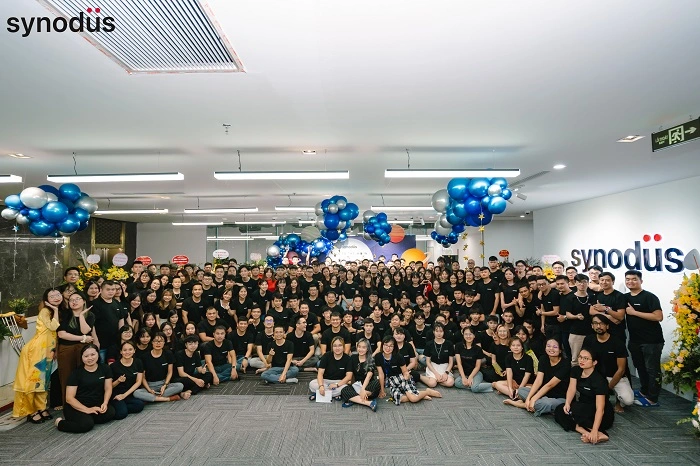
With 250+ certified developers and 5+ years in healthcare IT, Synodus has delivered HIS solutions for facilities across Vietnam, Singapore, and the broader APAC region. Their most cited case study is a comprehensive HIS for a 1,700-staff hospital managing 5,000 outpatients daily, which resulted in a 300% revenue increase and significant administrative cost savings post-implementation. See the full HIS case study.
For Malaysian facilities, Synodus offers offshore development at a fraction of local build costs, without compromising on compliance or integration depth. Their legal and technical teams cover HIPAA, NPSTI, ISO, HL7, and FHIR requirements out of the box, which matters for facilities planning ahead for Malaysia’s national interoperability push.
Key modules:
- EMR/EHR, LIS, RIS, PACS
- Inventory and pharmacy management
- Telehealth and patient mobile apps
- HRM, CRM, Healthcare ERP
- Finance and billing
Compliance: HIPAA, NPSTI, ISO, HL7, FHIR
Best for: Private hospitals or healthcare groups that need a highly customized, enterprise-grade HIS and are open to working with an experienced APAC development partner.
Thinking about working with Synodus?
2. Blueorbits
Type: Custom development
Based in: Malaysia (offices in UAE, Hong Kong, US, Pakistan)
Founded in 2015, Blueorbits has expanded its healthcare IT presence across multiple countries while keeping strong roots in the Malaysian market. They handle both standard and more advanced HIS builds.
Key capabilities:
- Appointment scheduling and medication tracking
- Telehealth and telemedicine integration
- Patient data management
- Integration with insurance management, health tracking apps, and hospital ERP software
- Government compliance support
Best for: Mid-size private hospitals or specialist facilities that want a custom build with regional support.
3. Jouleslabs
Type: Custom development
Based in: Malaysia, Bangladesh, US
A team of 50 developers with a track record of 15+ completed healthcare projects and an 80% client satisfaction rate. Jouleslabs puts a lot of emphasis on transparent communication and measurable delivery milestones.
Key capabilities:
- HIS design focused on patient care workflow optimization
- Compliance with Malaysian industry standards
- Scalable architecture for future module additions
Best for: Smaller private hospitals or clinics that want a project-based engagement with clear deliverables.
4. Team4Solution
Type: Custom development
Based in: Malaysia (clients in US, UK, India)
Active since 2016 with 250+ delivered projects, Team4Solution works across a broad tech stack (Java, .NET, Angular, Node.js, Flutter, React, Python) and has hands-on AI and IoT experience in healthcare builds. They focus on administrative workflow automation and healthcare mobile apps.
Best for: Facilities that need tight integration between HIS and mobile patient-facing apps, or those looking to automate administrative tasks with AI.
5. Techie
Type: Custom development
Based in: Kuala Lumpur
Started in 2017, Techie has grown to serve clients in Singapore, Dubai, China, and Malaysia. Their focus is digital transformation for smaller healthcare businesses, with a mobile-first approach to HIS integration.
Key capabilities:
- Appointment scheduling and telemedicine apps
- Remote patient monitoring
- Health tracking integrations
Best for: Clinics and day-care centres that want to extend their existing HIS with a patient-facing mobile layer.
Off-the-shelf HIS products
If speed of deployment and lower upfront cost are the priority, these ready-made products are worth looking at. Trade-off is less flexibility for customization down the line.
6. Origin Integrated Studios
Type: Off-the-shelf + customization
Based in: Malaysia
Origin Integrated Studios is one of the more established HIS providers built specifically for the Malaysian market. Their team focuses on healthcare IT in the region, which gives them a solid understanding of MOH requirements and local hospital workflows.
Key modules:
- Patient registration, admission, discharge, transfer (RADT)
- Pharmacy, inventory, and purchase order management
- Cashier and billing management
- Barcode labelling for patients and medication
- Integration with finance management systems
Best for: Small to mid-size Malaysian hospitals that want a proven, locally-supported system with minimal customization friction.
7. MyWAM (xHealth / Doctor Assist)
Type: Off-the-shelf SaaS
Based in: Malaysia
MyWAM‘s flagship product, Doctor Assist, is used by over 600 hospitals and clinics across Malaysia and Asia. It serves a wide range of facility types, from general hospitals to orthodontic clinics, physiotherapists, and aesthetic centres, making it one of the more versatile off-the-shelf options in the country.
Key modules:
- EMR and patient management
- Branch management for multi-site operators
- Dashboard-based analytics
- Appointment and queue management
Best for: Private clinics, specialist centres, and multi-branch facilities looking for a ready-to-deploy solution with low implementation overhead.
How to evaluate HIS vendors: A practical checklist
Before signing any contract, go through these:
1. Can they demonstrate Malaysian market knowledge?
- Do they know the difference between THIS, IHIS, and BHIS?
- Have they worked with MOH compliance requirements before?
- Can they name specific Malaysian regulations their system addresses?
2. What does implementation support look like?
- Is there a local support team, or at least a dedicated account manager in your timezone?
- What is the SLA for downtime or critical bugs?
- What does training look like for clinical staff with varying digital literacy?
For a detailed breakdown of what good implementation support looks like across all phases, see the hospital information system implementation plan.
3. How do they handle data?
- Where is data hosted? Local vs. overseas cloud has real PDPA implications.
- Who owns the data if you end the contract?
- Is the system HL7/FHIR ready for future government interoperability requirements?
4. What is the total cost of ownership?
- Implementation fee vs. ongoing licensing or maintenance
- Hidden costs: hardware, training, integration with existing systems
- Offshore vendors can reduce costs significantly while maintaining quality. Vietnam-based teams, for example, often deliver at 40-60% of the cost of local builds for comparable output.
- For a detailed breakdown, see: How much does a hospital information system cost?
5. Can you see a reference client?
- Ask to speak directly with a reference hospital of similar size and type
- Ask about post-go-live issues, not just the implementation phase
Real-world case in Malaysia: Hospital Selayang
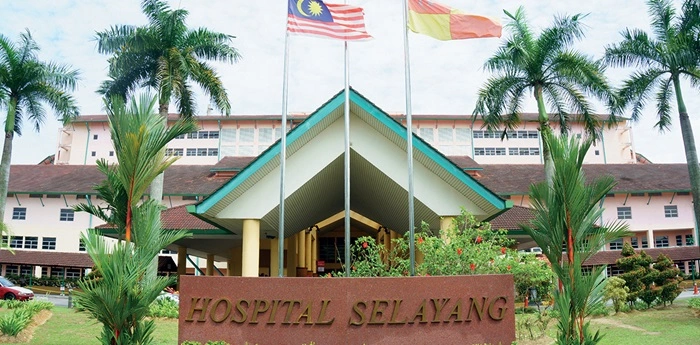
Hospital Selayang is probably Malaysia’s most referenced HIS success story. One of the first public hospitals to implement THIS, Selayang built a centralized data stream connecting its radiology department, ICU, operating rooms, and labs into one integrated system.
The system covers:
- Full patient management, scheduling, and inventory
- An automated billing module that sends invoices to patients after any procedure or test
- PIS, LIS, RIS, and PACS, all fully integrated
The biggest challenge Selayang ran into was not just software integration but device integration: getting data from physical machines like imaging devices, lab analyzers, and monitoring equipment to feed cleanly into the central system. That is still one of the most common sticking points in Malaysian hospital digitalization today.
Wrapping up
Malaysia’s HIS market sits between two very different realities. The public sector is still working through adoption barriers around budget, skills, and organizational change. The private sector is moving fast, pushed by medical tourism and rising patient expectations.
For any facility evaluating HIS right now, the key question to ask is not “does it have an EMR?” but “how well does it connect?” Interoperability, specifically FHIR and HL7 readiness, integration with government systems, and data portability, will not be optional for much longer.
Further reading:
- Real-world HIS implementation case studies: See how other APAC facilities approached their rollout
- Types of healthcare software: Understand where HIS fits in the broader digital health stack
- Best hospital information systems compared: A vendor-by-vendor breakdown to help you shortlist the right fit