Transparency note: This article is published by Synodus, a software development company. Synodus is included in this list and was assessed using the same criteria applied to all other vendors: type of solution, pricing, compliance coverage, and publicly available ratings from Clutch and company websites. No company paid for placement.
The Philippines HIS landscape in 2026
The Philippines is in an active phase of healthcare digitalization. As of 2025, more than 64% of government health facilities have adopted EMR systems, and 1,400 barangay health centers now use digital registries for maternal health, immunization, and disease surveillance tracking. The eHealth market is growing fast: from USD 2.82 billion in 2024, it is forecast to reach USD 10.77 billion by 2033, a compound annual growth rate of 16.05%.
This growth is being driven by government policy. The DOH’s Philippine Digital Health Strategy 2024-2028, announced at the inaugural Philippine Digital Health Summit in March 2024, sets a national agenda to unify EMR systems, expand telemedicine, and upgrade digital infrastructure across public hospitals. For hospitals still operating on paper or fragmented legacy software, the window to modernize is narrowing, especially with PhilHealth eClaims 3.0 now mandatory as of April 2026.
For hospital administrators, this context matters. An HIS investment today is not optional. It is infrastructure.
What makes a good HIS for the Philippines?
Beyond the standard HIS features (EMR, billing, scheduling, lab management, pharmacy), Philippine hospitals need a system built around local realities:
PhilHealth eClaims integration is now mandatory. Since 2018, all accredited healthcare institutions must submit claims electronically via PhilHealth-certified systems. In 2026, eClaims 3.0 became the only accepted version. Your HIS vendor must be certified or able to integrate with a certified Health Information Technology Provider (HITP).
DOH EMR compliance is required for any facility seeking or maintaining DOH accreditation. The DOH and PhilHealth jointly validate EMR software, and facilities must use validated systems as part of the Primary Care Benefit (PCB) package.
Philippine Health Information Exchange (PHIE) readiness ensures your system can connect to the national health data infrastructure as it matures.
Localization beyond language matters for patient-facing interfaces in provincial hospitals. Supporting Filipino and English is the baseline, but covering regional languages like Cebuano or Hiligaynon can meaningfully improve usability for patients in the Visayas and Mindanao.
Telehealth and e-services are increasingly standard. The Philippines’ geography (7,641 islands) makes remote-capable features not optional but essential for reaching dispersed patient populations.
Affordability and scalability for public hospitals and rural facilities, which often operate with tight IT budgets and limited on-site technical staff. Cloud-based and modular HIS options are usually the most practical fit.
Key compliance requirements for HIS to know
Before evaluating any vendor, make sure you understand these three requirements:
- PhilHealth eClaims 3.0 (mandatory as of April 1, 2026) All PhilHealth-accredited healthcare institutions must have migrated to eClaims 3.0. Facilities using earlier versions had their access disabled on March 31, 2026. Your HIS must either be certified for direct data transmission to PhilHealth, or work with a certified HITP to handle the connection.
- DOH EMR standards and accreditation The DOH requires EMR software to pass a joint DOH-PhilHealth validation process. Facilities that want to participate in the PCB package must use validated EMR software. Your vendor should be on the list of certified providers or be able to demonstrate compliance.
- Data Privacy Act of 2012 (Republic Act 10173) Any system storing patient data in the Philippines must comply with the Data Privacy Act, overseen by the National Privacy Commission. This covers data collection, storage, access control, breach notification (within 72 hours for significant breaches), and the appointment of a Data Protection Officer (DPO) for large facilities. In 2024, the NPC issued Advisory No. 2024-04 adding specific AI and automated decision-making requirements to healthcare contexts.
The 10 best HIS providers in the Philippines
| Company | Solution type | Pricing | Clutch rating |
|---|---|---|---|
| Synodus | Custom + packaged | From $25/hr | 5.0 |
| Cambria | Custom | $25-$50/hr | 4.3 |
| Valuelabs | Custom + packaged | Not public | 4.3 |
| Flatworld Solutions | Custom + packaged | From $25/hr | 4.7 |
| WhiteWidget | Custom | $50-$99/hr | 4.6 |
| Hybrain | Custom + OTS (MEDtrix) | From $25/hr | Not listed |
| Bizbox | OTS | Not public | Not listed |
| Sancysolutions | OTS | Not public | Not listed |
| Comlogikph | OTS | Not public | Not listed |
| Exist | OTS + light custom | $25-$49/hr | Not listed |
1. Synodus
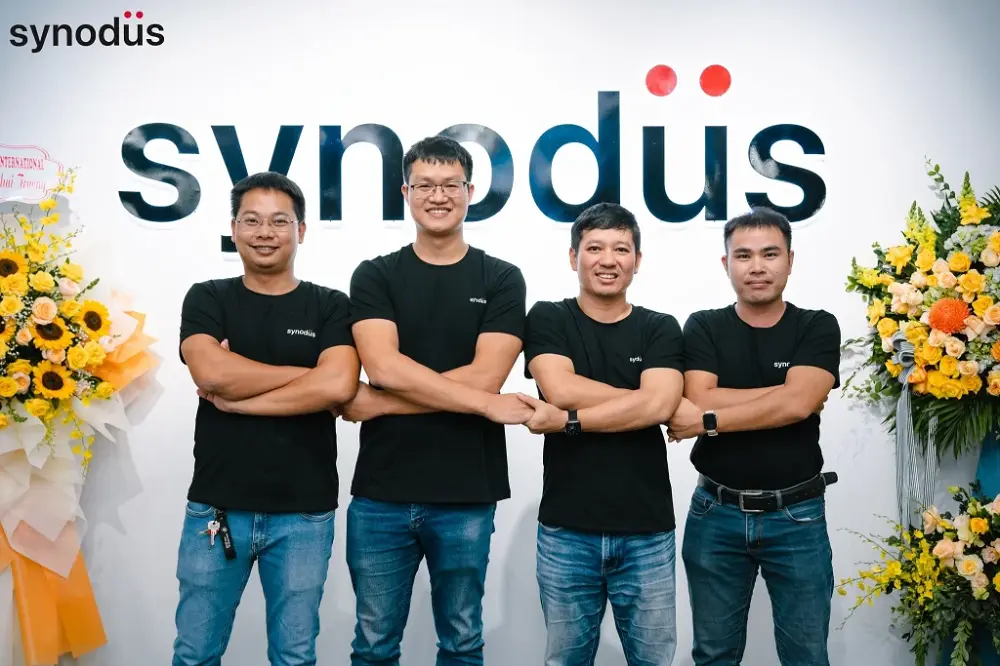
Synodus is a Vietnam-based software development company with a dedicated healthcare division serving clients across the Philippines and APAC. With over 250 healthcare software developers, the team covers the full range of HIS modules, from EMR and clinical workflow to billing, pharmacy, inventory, and telehealth integration.
Synodus works in two modes: building on a packaged HIS base that is then customized to fit your operational workflows and local compliance requirements, or developing a system fully from scratch for hospitals with highly specific needs. Both approaches include compliance research for PHIE, DOH, PhilHealth, HIPAA, HL7, and ISO standards.
For a recent project, Synodus built an HIS for a Vietnamese university hospital serving 5,000 outpatients and 1,700 medical staff daily. Results included a 300% revenue increase, $70,000 in monthly administrative cost savings, and a 30% improvement in patient satisfaction. The architecture – integrated EMR, inventory management, analytics dashboard, and patient mobile app – mirrors what Philippine hospitals typically require. Full details in the HIS case study.
Best for: Mid-to-large hospitals or healthcare networks that need a system built around their specific workflows rather than adapting to a template. Also well-suited for facilities that want a single vendor handling compliance, development, and long-term maintenance.
2. Cambria
Cambria is a technology company with over 40 years of experience and offices in both the Philippines and the United States. With approximately 200 developers, they offer full-cycle software development and staff augmentation, covering custom development, QA, and testing.
In healthcare, Cambria builds clinical and administrative systems including HIS, EHR, and patient portal solutions. Their team is experienced in international healthcare compliance standards, including data privacy regulations that apply across both their US and Philippine client base. For Philippine hospitals, their longevity and dual-market presence means they bring cross-regional experience that smaller local vendors may lack.
Best for: Hospitals looking for a mature, established outsourcing partner with a long track record. A good fit for facilities that want a reliable development relationship rather than a product vendor.
3. Valuelabs
Valuelabs is a global digital transformation company with offices in the Philippines and multiple other countries, and approximately 7,000 employees worldwide. They apply technologies including AI, machine learning, cloud, and mobile to healthcare contexts across hospitals, clinics, large healthcare systems, surgery centers, and specialists.
Their HIS offering covers patient tracking, EMR and EHR, insurance and claim management, clinical data management, and lab informatics. Valuelabs takes a modular approach: they can integrate new systems with a hospital’s legacy infrastructure or replace the existing system entirely, depending on the scope of the digital transformation needed.
Best for: Healthcare organizations that need large-scale digital transformation, not just a point solution. A good fit for hospital networks or systems that are restructuring their IT infrastructure across multiple facilities.
4. Flatworldsolutions
Flatworld Solutions has 20 years of market presence and operates across India, the Philippines, Malaysia, the US, and the UK, with a team of around 5,000 employees. They offer IT outsourcing, business consulting, and IT-managed services with a strong track record in healthcare.
Their healthcare development services are HIPAA-compliant and include medical billing software, HIS design and management, EMR and EHR development, clinical documentation, claims processing software, healthcare data analytics, and medical ERP. Their Philippine-based team maintains familiarity with local regulatory updates, which is a practical advantage for compliance-sensitive implementations. If you are still deciding what kind of healthcare software development partner fits your situation, their breadth of services makes them worth evaluating early.
Best for: Facilities that need a broad range of healthcare IT services under one umbrella, covering not just HIS but also billing systems, analytics, and ongoing IT management.
5. WhiteWidget
WhiteWidget is an award-winning IT agency with offices in Manila and Hong Kong, serving clients primarily across the Philippines and North America. They specialize in web development, mobile development, cybersecurity, AI, and machine learning.
In healthcare, WhiteWidget builds HIPAA-compliant applications that can be assembled into a complete HIS: mobile apps for patients, doctors, and partners; EHR; telehealth solutions; AI and analytics tools for research and imaging diagnosis; integration with healthcare IoT and wearables; and patient notification and scheduling systems. Their AI and IoT capabilities make them a good fit for hospitals that want to go beyond basic digitalization.
Best for: Hospitals that want a modern, mobile-first system with AI and IoT capabilities built in. Also well-suited for facilities with a significant telehealth component, given the Philippines’ archipelagic geography.
6. Hybrain
Hybrain has represented the Philippines at multiple international healthcare IT conferences and offers a comprehensive range of both custom and off-the-shelf HIS solutions. Their flagship off-the-shelf product, MEDtrix, is a fully integrated HIS available as a complete package or with on-demand features, designed to meet the needs of most healthcare organizations without requiring custom development.
Their module coverage is broad: Hospital Management (HIS), Inventory Management (MMS), Human Resources (HRIS), Hospital Accounting (AMS), Fixed Assets (FAMS), Clinic Management (CMS), Electronic Health Records (EHR), and PhilHealth Claims Portal (PHIC). The MEDtrix product represents a significant investment in a locally-developed, Philippines-specific solution.
Best for: Hospitals that want a proven, locally-developed off-the-shelf system with strong PhilHealth integration. MEDtrix is a practical choice for facilities that need a complete HIS quickly, without the lead time of a custom build.
7. Bizbox
Bizbox is one of the longest-established HIS providers in the Philippines, trusted by over 3,000 customers from small clinics to major healthcare networks. They hold multiple certifications: accredited as a Health Information Technology Provider (HITP), eClaims certified on the Case Rate System, DOH-accredited for EMR compliance, and verified as a DOH third-party service provider for telemedicine.
Their HIS features include duplicate registration detection, automated SMS notifications, inventory and distribution management, patient and hospital data management, and a patient kiosk module. Their local accreditations make them one of the safer choices for hospitals that want a vendor with demonstrated compliance credentials rather than self-reported ones.
Best for: Small-to-medium hospitals that want a locally-accredited, proven off-the-shelf product with documented PhilHealth and DOH certification. Especially relevant for facilities that prioritize compliance verification over flexibility.
8. Sancysolutions
Sancysolutions operates across the Philippines, Malaysia, and Pakistan, offering off-the-shelf healthcare software with a focus on interoperability. Their flagship product, DigitalSENSE, is a hospital information management system with 14 core modules and 14 supplementary modules. It is compliant with HL7, DICOM, ICD-10, and SNOMED CT, and has been deployed in over 200 hospitals over the past decade.
Beyond DigitalSENSE, their product line includes labSENSE (laboratory information management), rehabSENSE (rehabilitation information), and clinicSENSE (clinic management). The multi-product approach means facilities of different types and sizes can find a relevant fit within their ecosystem.
Best for: Hospitals that want an internationally-certified, multi-standard compliant system with a proven deployment record. The interoperability credentials (HL7, DICOM, SNOMED CT) make them a strong choice for facilities that need to connect with external systems or reference laboratories.
9. Comlogikph
Comlogikph has been serving Philippine hospitals since 1999, with over 200 hospital clients, 5,000 doctors using their system, and more than 20 awards and certifications. Their Hospital Information and Management System is designed to meet requirements across all hospital levels in the Philippines.
Key certifications include DOH and PhilHealth certification. Their system covers online professional fee entry and monitoring, multi-warehouse inventory and supplier management, expiry and reorder alerts, and a patient satisfaction survey system. The longevity and depth of their Philippine-specific deployment record is their primary differentiator.
Best for: Hospitals that want a locally-rooted, battle-tested vendor with a long history of operation in the Philippine market. The combination of DOH and PhilHealth certification and a large existing client base provides meaningful proof of reliability.
10. Exist
Exist is one of the early adopters of Java open-source software in the Philippines, with over 100 employees in the US and the Philippines. Their technology choice gives them an advantage in building highly scalable systems, though their healthcare products are primarily off-the-shelf with limited customization.
Their product line includes Medcurial Clinic Management System (a web-based application covering the full business cycle of a clinic), Medcurial Electronic Medical Records (the first DOH NCR-certified EMR software with integrated patient portal and telemedicine), and MERX Hospital Information System (a more advanced care platform covering both operational and clinical information management). The DOH NCR certification on their EMR is a notable compliance credential.
Best for: Clinics and smaller hospitals that need a DOH-certified, web-based system with solid telemedicine integration. Their open-source foundation makes them a practical fit for facilities that may want to work with their own developers to extend the system over time.
How to choose between custom, OTS, and hybrid

Most Philippine hospitals fall into one of three situations:
Off-the-shelf (OTS) makes sense if your workflows are relatively standard, your budget is tight, and you need to deploy quickly. Local OTS providers like Bizbox, Comlogikph, Hybrain, and Sancysolutions offer products that are already certified for PhilHealth and DOH, which cuts compliance overhead significantly. The trade-off is limited flexibility. Adapting the system to your specific workflows often means working around the software rather than the other way around. For a breakdown of what each option typically costs, see the HIS cost guide.
Custom development is the right choice if your hospital has complex or unique workflows, is operating at high volume (thousands of outpatients per day), or needs specific integrations that OTS products do not support. The higher upfront investment typically pays off over 3-5 years through better operational fit and lower workaround costs. Vendors like Synodus, Cambria, and Valuelabs work in this space.
Hybrid (packaged base + customization) is the most common approach for mid-sized hospitals. Start with a pre-built system covering the essentials (EMR, billing, scheduling, pharmacy), then customize the modules most specific to your workflows. This balances speed, cost, and long-term flexibility. Synodus and Flatworld Solutions both operate in this model.
A useful starting point: if your main goal is PhilHealth compliance and basic digitalization, OTS is fine. If you are managing high patient volumes, multiple departments, or planning to scale across facilities, custom or hybrid will serve you better in the long run. For a broader view of the global HIS vendor landscape, including how Philippine providers compare to international options, that guide covers the full picture. For a broader comparison of leading HIS vendors across the market, see our guide to the best hospital information systems.
FAQs
Not all HIS modules are legally required, but EMR use is mandated for facilities participating in PhilHealth’s Primary Care Benefit package, and eClaims submission is mandatory for all PhilHealth-accredited health care institutions as of 2018. With PhilHealth eClaims 3.0 now required as of April 2026, any facility still using paper-based or legacy systems for claims will face disruptions in reimbursements.
Yes. For direct electronic claims submission, a hospital’s HIS or EMR must either pass PhilHealth’s software certification process or work through a PhilHealth-accredited Health Information Technology Provider (HITP). Vendors who have already been certified for a previous version of eClaims still need to recertify for each new major version of the eClaims Web Service (eCWS).
Yes, though the options look different from what large urban hospitals deploy. Cloud-based and modular HIS products lower upfront costs by eliminating on-premise server infrastructure, and some local vendors offer pricing tiers designed for rural health units (RHUs) and barangay health centers. Outsourcing development to lower-cost regions like Vietnam or India, while maintaining local compliance expertise, is another common strategy.
A small clinic implementing an off-the-shelf system can be live in a few months. A mid-sized hospital deploying a customized HIS typically takes 6-12 months. Large multi-department implementations can run 12-24 months, especially when migrating from paper-based records. For a full breakdown of each phase, see the hospital information system implementation plan.
An EMR (Electronic Medical Record) is a digital patient record system that stores clinical data for use within a single facility. An HIS is broader: it integrates EMR with administrative, billing, inventory, pharmacy, and operational systems across the whole hospital. In practice, Philippine compliance requirements (DOH EMR standards, PhilHealth eClaims) focus on the EMR layer, but a well-functioning hospital needs both. The EMR is a component of the HIS, not a substitute for it. For a deeper comparison of EMR, EHR, and PHR, this guide covers the differences in full.
Outsourcing to specialized IT vendors, particularly those based in Vietnam, India, or Malaysia, allows Philippine hospitals to access experienced healthcare software development teams without the cost of building an in-house IT department. For smaller hospitals in particular, this is often the only realistic path to a customized or hybrid HIS. The key is choosing a vendor that understands local compliance requirements (PhilHealth, DOH, Data Privacy Act), not just one with generic healthcare IT experience. For a broader view of regional options, the HIS providers in Malaysia guide covers a comparable market for reference.