Launching an NFT marketplace doesn’t have to be expensive or overly technical. For creators, artists, and Web3 startups, WordPress themes offer a fast, affordable way to bring an NFT marketplace concept to life, without building everything from scratch.
But here’s the challenge: most “NFT marketplace” themes only provide the UI, while others offer real Web3 features like wallet login, minting support, or marketplace modules. Choosing the right one can be confusing.
That’s why this guide highlights the best NFT marketplace WordPress themes in 2026 – what they can actually do, who they’re best for, and where their limitations are. Whether you’re building a simple creator storefront, a multi-vendor NFT market, or an MVP to validate your idea, you’ll find a theme that fits your needs.
Let’s explore the top themes worth considering and how to pick the right one for your project.
What makes a greate NFT Marketplace WordPress theme?
Before choosing a theme, it’s important to understand what actually makes an NFT marketplace work. A strong WordPress theme should offer clean design, smooth user experience, and most importantly – compatibility with real Web3 features. Here are the core elements to look for:
- Web3 readiness: Wallet integrations (like MetaMask or WalletConnect) and support for popular NFT standards such as ERC-721 and ERC-1155.
- Marketplace essentials: Features for listing, buying, selling, creator profiles, and if needed – multi-vendor support through plugins like Dokan or WCFM.
- Performance & SEO: Fast loading, lightweight code, mobile optimization, and solid Core Web Vitals to handle media-heavy NFT pages.
- Customizability: Flexible layouts, builder compatibility (Elementor/Gutenberg), and enough design freedom to match your brand.
- Reliablity: Clean code, frequent updates, and developer support to keep Web3 functions stable over time.
With these criteria in mind, you can quickly determine which themes are simply “NFT-style templates” and which ones are truly suitable for building an NFT marketplace on WordPress. Now let’s explore the top options.
Top 12 NFT Marketplace WordPress themes for your consideration
| Theme | Best for | Web3 capability | Performance | Price |
|---|---|---|---|---|
| Enefti | Full NFT marketplace, multi-vendor, serious projects | Good | Moderate → Fast | $39 |
| Nuron | Multi-vendor NFT marketplace, auction-based stores | Medium | Fast | $129 |
| Gigaland | NFT galleries, creative portfolios, digital art marketplaces | Medium | Moderate | $49 |
| Netzen | Large-scale multi-vendor marketplace | Good | Moderate → Heavy | $89 |
| Raroin | Startup MVPs, Rarible-style marketplaces | Medium | Fast | $39-59 |
| Ciscryp | Crypto + NFT shop, collectibles marketplace | Medium | Moderate | $49-59 |
| Metovo | NFT exhibitions, small marketplaces | Medium | Fast | $39-59 |
| NFTLY | Simple NFT portfolios & showcases | Low | Fast | $39-49 |
| Banu | Collectibles marketplace (mid-size) | Medium → Good | Moderate | $49–69 |
| Geniee | NFT drops & collectibles marketplace | Good | Moderate → Fast | $49–69 |
| Unitok | Crypto collectibles + NFT drops | Medium | Moderate | $49–69 |
| Wiggle | Minimal marketplaces & MVPs | Low → Medium | Fast | $39–49 |
1. Enefti
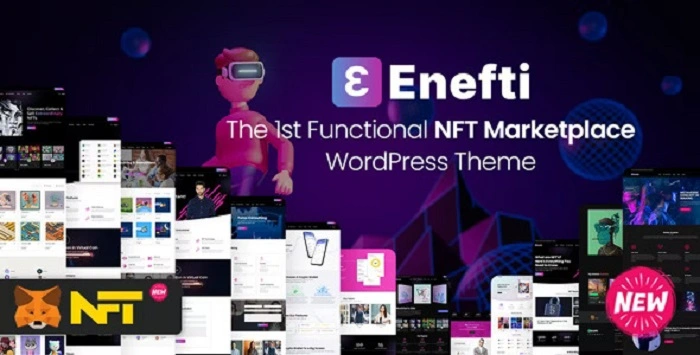
Enefti gives the impression of a platform that’s almost ready the moment you activate it. Its layout logic mirrors the UX of mainstream NFT platforms, making it simple to kickstart a functional marketplace without deep customization.
What stands out immediately
- Marketplace pages look clean and structured right from the demo.
- Collection and creator templates feel intuitive even for first-time admins.
- The WooCommerce foundation plugs smoothly into Web3 add-ons.
- Fast setup makes it easy to ship a working MVP quickly.
Keep in mind:
- Advanced minting workflows will still require additional plugins.
- Multi-vendor setups can stretch hosting requirements.
Enefti provides a solid launchpad for lean teams seeking speed, simplicity, and predictable customization paths.
2. Nuron
Nuron puts presentation first, giving your marketplace a futuristic and polished feel from the start. It’s built for visual impact while keeping user flows smooth and straightforward.
What stands out immediately
- Launch a visually impressive storefront with minimal design work.
- Give creators a platform that highlights their collections elegantly.
- Make browsing feel modern through animations and soft gradients.
- Build trust quickly for early-stage Web3 projects.
Keep in mind:
- Some animations may feel heavy on lower-end devices.
- Web3 functionality still depends on plugins.
- Deep customization requires familiarity with the builder.
Nuron excels for teams that want an eye-catching marketplace interface and a smooth design handoff process.
3. Gigaland
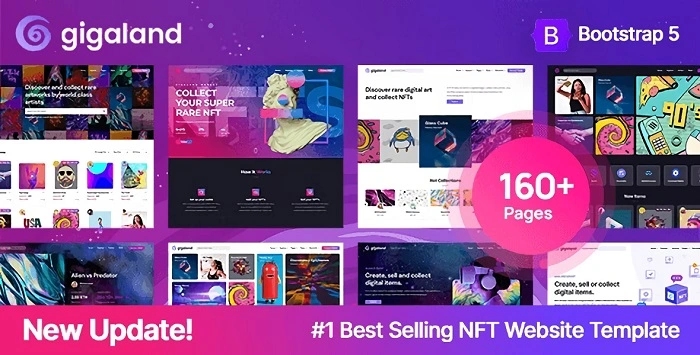
Gigaland provides a straightforward, no-nonsense structure ideal for marketplaces that prioritize clarity over theatrics. Its layouts make it easy to map out browsing flows without reinventing the wheel.
What stands out immediately
- Templates follow a logical structure familiar to NFT users.
- Pages load quickly thanks to lightweight design decisions.
- Browse, filter, and profile flows are consistent across the theme.
- Works well for teams that prefer predictable UI patterns.
Keep in mind
- The minimalist aesthetic may feel plain for highly creative brands.
- Requires add-ons for richer Web3 interactions.
Gigaland delivers strong functionality for projects that want more than a basic template but don’t need fully custom development.
4. Netzen
Netzen leans into refined layouts and carefully balanced typography. The marketplace feels polished, with clear visual hierarchy guiding users through collections and featured items.
What stands out immediately
- Build a premium, curated NFT storefront.
- Emphasize brand storytelling or high-value artwork.
- Offer a smooth discovery flow that feels deliberate.
- Stand out visually without overwhelming the user.
Keep in mind:
- Bold styling may require brand-matching adjustments.
- Some sections rely heavily on imagery for impact.
- Needs external plugins for complex listing flows.
Netzen is a straightforward, user-friendly starting point for teams prioritizing usability and development efficiency.
5. Raroin
Raroin is designed with structural clarity, giving creators, collectors, and buyers a familiar environment to navigate. Its page templates help teams assemble a marketplace that feels robust from day one.
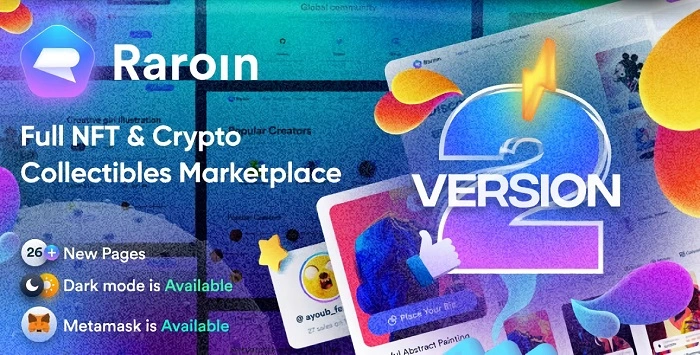
What stands out immediately
- Strong segmentation of listing, profile, and collection pages.
- Clear information hierarchy throughout the marketplace.
- Layouts make large catalogs easy to browse.
- Simple to extend with additional components.
Keep in mind:
- Visual design leans traditional compared to trendier themes.
- Requires plugin support for minting functionality.
Raroin strikes a beautiful balance between functionality and visual appeal.
6. Ciscryp
Ciscryp comes with bold colors, energetic UI patterns, and a layout style that feels inspired by gaming marketplaces. It gives your project a lively personality right out of the box.
What stands out immediately
- Build a marketplace aimed at younger or gaming-oriented audiences.
- Showcase collections with impactful card-based layouts.
- Present drops and releases with excitement and flair.
- Create a brand presence that feels dynamic rather than corporate.
Keep in mind:
- Strong color palettes may not suit every vertical.
- Heavy visuals can require optimization.
- Web3 features depend on compatible plugins.
Ciscryp helps teams move quickly with a minimal, functional marketplace interface.
7. Metovo
Metovo embraces simplicity and clarity, making it a strong contender for teams who want an uncluttered NFT marketplace experience. It offers clean layouts with easy navigation across collections.
What stands out immediately
- Minimalist design that keeps user attention on the assets.
- Predictable layouts reduce friction for first-time visitors.
- Category and collection pages are neatly structured.
- Easy to maintain for long-term scaling.
Keep in mind:
- Brands wanting flashy visuals may find it too understated.
- Lacks built-in advanced transaction mechanics.
Metovo delivers a refined, brand-friendly marketplace interface ready to customize.
8. NFTLY
NFTLY delivers a sleek, editorial feel that elevates digital art and curated collections. It’s built for projects where presentation is central to the experience.
What stands out immediately
- Showcase high-value or limited-edition digital artworks.
- Build a brand style similar to a digital art magazine.
- Emphasize spacious layouts and clean typography.
- Create a premium impression from the first scroll.
Keep in mind:
- Image-heavy layouts require proper asset optimization.
- Some sections rely on strong visuals to maintain impact.
- Web3 features aren’t native.
NFTLY keeps things efficient and user-friendly for teams with tight deadlines.
9. Banu
Banu is a functional, business-oriented theme built for marketplaces needing structure and consistency. It avoids visual distractions in favor of practical layouts.
What stands out immediately
- Well-organized sections for profiles, listings, and categories.
- Clear navigation that scales well for larger catalogs.
- Clean UI reduces cognitive load for buyers.
- Works well for marketplaces in growth phase.
Keep in mind:
- Not ideal for brands that rely heavily on aesthetics.
- Web3 interactions must be layered manually.
Banu provides a flexible framework that puts creators at the center of the marketplace experience. Great for creator-centered marketplaces, artisanal NFTs, or branded digital item platforms.
10. Geniee
Geniee brings a friendly, approachable personality to NFT commerce. Its soft design style helps users interact without feeling overwhelmed by technical complexity.
What stands out immediately
- Build a community-focused marketplace.
- Make NFT shopping feel casual and welcoming.
- Support creators who want a warm presentation style.
- Differentiate from highly technical or corporate designs.
Keep in mind:
- Light-hearted styling may not match premium luxury brands.
- May need customization for high-traffic catalogs.
- Web3 support depends on add-ons.
Geniee is a smart pick for marketplaces built around exploration and category-based discovery.
11. Unitok
Unitok strikes a balance between clean design and marketplace functionality. It offers a straightforward layout system that keeps the focus on browsing and discovery.
What stands out immediately
- Professional, tidy visual structure suitable for various niches.
- Consistent page layouts for creators, collections, and assets.
- Easy to modify and extend for long-term roadmap growth.
- Great for teams needing predictable UX patterns.
Keep in mind:
- Not heavily stylized for artistic or flashy brands.
- Web3 integration requires standard plugin setups.
Unitok provides a flexible baseline suitable for most mid-range marketplace ideas.
12. Wiggle
Wiggle embraces playful visuals and a bright personality, making the marketplace feel fun and energetic. It’s ideal for projects that don’t want a “serious tech” vibe.
What stands out immediately
- Build a marketplace for collectibles, avatars, or fandom items.
- Convey a sense of fun through animation and color.
- Encourage user exploration with light, engaging UI elements.
- Create a vibrant brand identity from day one.
Keep in mind:
- The playful aesthetic doesn’t match every brand tone.
- Animation-heavy layouts may need performance tuning.
- Advanced marketplace mechanics must be added separately.
Wiggle is perfect for fun, energetic, and community-driven NFT marketplace concepts.
Common problems when using WP themes for NFT marketplaces
While WordPress NFT marketplace themes can help you launch quickly and keep development costs low, they also come with limitations that many teams only realize after going live. Here are the most common issues you should be prepared for:
1. Limited native Web3 functionality
Most WordPress themes don’t include built-in Web3 features like minting, wallet authentication, bidding logic, or smart contract triggers.
What this causes:
- You must rely on third-party plugins for essential marketplace functionality
- Fragmented systems that behave inconsistently
- Higher risk of plugin conflicts during updates
If your marketplace requires anything beyond simple listing and browsing, be ready to add custom development.
2. Plugin dependency & Compatibility conflicts
WordPress themes often depend heavily on WooCommerce, wallet plugins, and marketplace extensions.
Common problems:
- Plugins stop working after major WP or theme updates
- Two plugins overlap and break the checkout/bidding flow
- Wallet connections become unreliable
NFT marketplaces rely on smooth bid → purchase → transaction flows. Any small break in that chain affects user trust.
3. Performance issues with large collections
Most NFT marketplace themes are visually impressive but not optimized for high-volume browsing.
You may face:
- Slow grid loading when displaying hundreds of NFTs
- High Time-to-Interactive (TTI) on collection pages
- Heavy JS bundles causing lag on mobile
- Difficulty implementing infinite scroll or dynamic loading
Performance quickly becomes a bottleneck once you scale past a simple creator portfolio.
4. Security concerns when integrating wallets
Connecting wallets to a WP site is significantly more risky than a custom Web3 build.
Typical issues:
- Outdated wallet libraries in plugins
- Insecure JWT / session handling
- Exposed API keys
- Improper nonce/CSRF validation
Even small misconfigurations can lead to asset or account vulnerabilities.
5. Limited customization for unique marketplace models
If your marketplace isn’t a “classic” model (e.g., gaming NFTs, membership passes, redeemable NFTs, multi-chain assets), WordPress themes quickly hit a ceiling.
Common restrictions:
- Hardcoded layouts
- Rigid filtering logic
- No native support for metadata-based search
- No room for dynamic on-chain interactions
You’ll likely need developers to refactor parts of the theme.
- Read more: Top 12 WordPress NFT Minting Plugins In 2025
Theme vs Custom development: Which is better for you?
All these challenges point to a simple truth: themes can help you get started, but they can’t carry you all the way. Before choosing how to build your NFT marketplace, it’s worth looking at how WordPress themes stack up against full custom development. The comparison below gives you a quick, honest snapshot.
| Factor | WordPress theme | Custom development |
|---|---|---|
| Cost | Very low | Higher, depending on complexity |
| Speed | Extremely fast – an MVP can go live in days | Slower – requires architecture, development, QA |
| Customization | Limited by theme & plugins | Fully customizable to your business logic |
| Real blockchain features | Very limited. Mostly simulated or plugin-based | Full on-chain features with native blockchain logic |
| Scale & performance | Suitable for small traffic; performance drops when scaling. | Designed to handle large user volumes and high load. |
| Security | Vulnerable due to plugins/themes. | Strong, controllable security – essential for financial assets. |
Important note: WordPress themes are great for quick MVPs, demos, or NFT showcases, but they are not built for real blockchain workflows like on-chain minting, wallet authentication, auctions, royalties, or multi-chain operations. If you need serious NFT marketplace functionality, scalability, security, and custom UX, custom development is the only viable choice.
If your NFT marketplace needs real blockchain features, scalability, and security, a custom build is the only solution. Synodus brings 6+ years of blockchain expertise and a team of 300+ engineers to deliver end-to-end NFT marketplace solutions – fast, secure, and fully tailored to your project.
Ready to build a marketplace that truly performs?
Frequently asked questions (FAQ)
No. WordPress themes can display NFTs or simulate minting, but they cannot handle real on-chain NFT creation. Custom development or blockchain plugins are required.
Some themes can integrate MetaMask via third-party plugins, but native support is limited. For reliable wallet interaction, custom development is recommended.
Yes. Most WordPress themes don’t include minting functionality. A dedicated plugin or custom smart contract is necessary for real NFT minting.
Not natively. Multi-chain support requires custom development or specialized plugins beyond what typical themes offer.
WordPress can be secure for simple demos, but running a real NFT marketplace on WordPress carries higher risk due to plugin vulnerabilities and limited blockchain security.
Wrapping up
The 12 NFT marketplace WordPress themes we covered offer a wide range of options for building your platform quickly and efficiently. From layouts designed for creators and collectors to support for basic Web3 integrations, these themes make it easy to showcase collections, launch MVPs, and explore NFT concepts without heavy development.
By reviewing features, performance, and suitability for different use cases, you can choose the theme that best fits your project’s style, goals, and audience – helping you get your NFT marketplace up and running with confidence.
More related posts from Synodus you shouldn’t skip: