What matters when evaluating a vendor
Many buyers focus on location, hourly rates, and portfolio size. In reality, you should focus on four operational areas that directly impact project success in the MENA region.
1. Delivery governance & scope
- What to check: Do they define the scope in writing before coding starts? What is their exact process when requirements change mid-project?
- Why it matters: Starting development within days of first contact looks fast, but almost always leads to massive budget overruns when unmapped requirements surface later.
- How to decide: If you have strict budgets, prioritize vendors with heavy upfront architecture planning. If you are experimenting, flexible “time-and-materials” governance may be acceptable.
2. UAE & MENA localization familiarity
- What to check: Do they understand Arabic/RTL (Right-to-Left) UI requirements? Are they experienced with the UAE Federal Personal Data Protection Law or DIFC data requirements?
- Why it matters: Building a technically sound app that violates local data sovereignty laws or breaks when translated into Arabic creates immediate deployment blockers.
- How to decide: If targeting local government or retail, regional familiarity is mandatory. If building a global backend system from a Dubai hub, this is less critical.
3. Engineering seniority & AI accountability
- What to check: What percentage of the specific team assigned to your project is senior or mid-level? How do they verify AI-generated code?
- Why it matters: Many vendors sell you on the experience of their leadership team but staff your project with junior developers. Junior teams over-relying on AI coding tools will generate hidden technical debt.
- How to decide: Always ask for a written commitment to the seniority of the actual team working on your project, not just the company’s overall profile.
4. Verifiable domain knowledge
- What to check: Do they have verifiable case studies in your specific industry with measurable outcomes (e.g., cost reduction, deployment speed), rather than just visual deliverables?
- Why it matters: A vendor who claims “expertise in every industry” usually has shallow knowledge of complex sectors like finance, healthcare, or logistics.
- How to decide: Look for vendors who challenge your assumptions during the pitch process. A partner who simply agrees with every requirement will not protect you from strategic mistakes.
Which vendor fits which situation
| Your situation | Recommended vendor | Why it fits | Key trade-off |
|---|---|---|---|
| Enterprise / BFSI Systems | Synodus, Fingent | Proven regulated case studies; senior-heavy teams; strict governance (ISO 27001) | Moves slower upfront to drastically lower post-launch risk |
| Cloud-native scale-ups | Simform | Deep expertise in AWS, Azure, GCP, and AI integrations | Change management processes can be rigid mid-project |
| Fintech / Logistics integrations | Competenza Innovare | Strong history of connecting to existing UAE payment & ERP infrastructure | Less focus on upfront strategic product consulting |
| Fast startup MVPs | Synergy Labs | Fast, design-led execution without corporate over-engineering | Lacks heavy compliance structures for regulated industries |
| Fixed-cost deliverables | Shakuro | Transparent pricing and defined timelines for strict budgets | Fixed scope creates friction if your requirements evolve |
| Government / Local brands | Branex | Deep local UAE relationship; strong Arabic UI/UX focus | Reporting cadences require proactive client management |
| MENA mobile-first apps | Techgropse | Excellent navigation of regional compliance and cultural specificities | Slower response times during periods of high project volume |
Detailed breakdown of UAE software development companies
The companies below appear consistently in verified 2026 reviews. They represent different strengths, price points, and delivery profiles.
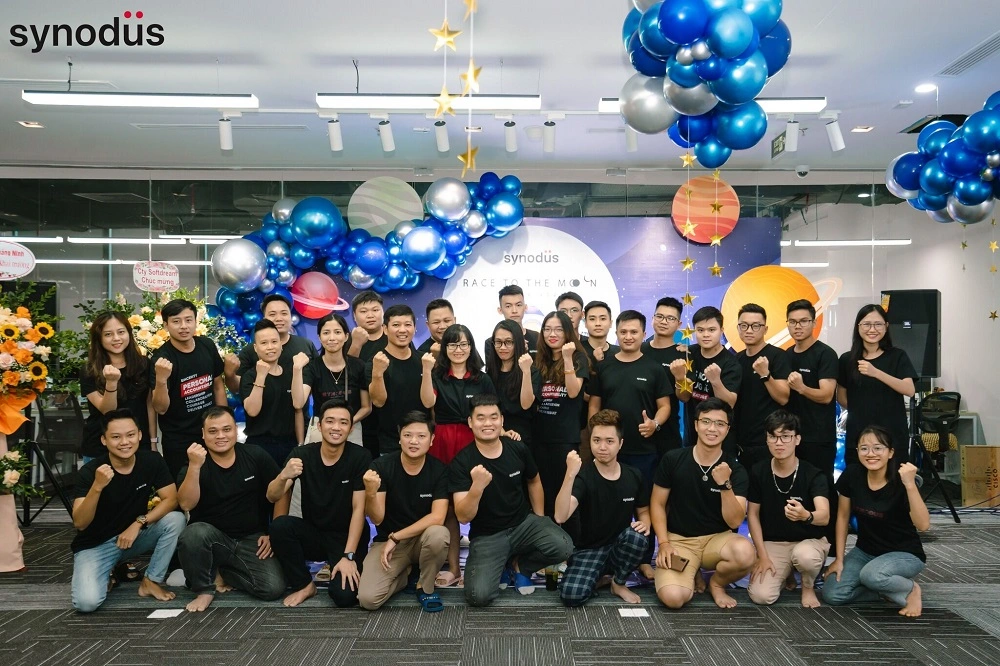
Synodus – A high-performance software company specializing in enterprise-grade delivery, utilizing a lean, senior-heavy engineering model from Vietnam
Best for: Financial services, healthcare, retail, and public sector companies that need outcome-accountable delivery rather than time-and-materials billing.
Synodus is a Vietnam-based software company that has built a track record in the UAE and MENA market through its work with enterprise clients including BOC Aviation and KPMG. What distinguishes Synodus operationally is its delivery structure: 87% of engineers are at mid or senior level, and all engagements begin with a structured requirements and architecture phase before development starts. The company operates under ISO 27001 and PCI-DSS frameworks.
Their proprietary delivery approach combines Agile iteration with Waterfall-style upfront planning, designed specifically to reduce the cost overruns that occur when developers start coding before requirements are properly defined.
What clients consistently cite: Strong technical depth in blockchain, API integration, and cloud. Fast team onboarding, typically under two weeks. Competitive rates that clients describe as two to three times more cost-effective than comparable Dubai-based vendors.
What to consider: Synodus operates remotely from Vietnam. Time zone difference is a real operational consideration, though the company offers around-the-sun support structures for clients who need it. If you require an on-site presence in Dubai, this is not the right fit.
Simform – A global engineering company with a strong Dubai presence, specializing in scalable cloud architecture and AI/ML embedded systems
Best for: Mid-sized enterprises and scale-ups that need cloud-native architecture, AI integration, and strong technical project management.
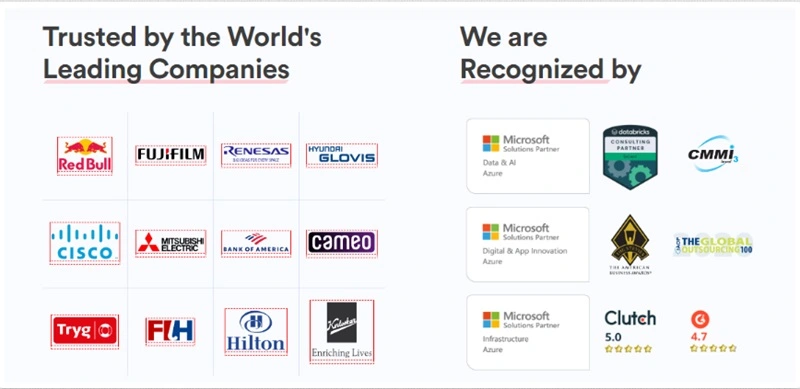
Simform is a global engineering company with a Dubai office, consistently ranked in Clutch’s top tier for the UAE market. 88% of Simform reviewers praise their technical expertise, project management, and alignment with client values. Their emphasis is software architecture, building systems designed to scale rather than systems designed to ship quickly.
Their strongest domain is cloud infrastructure, with deep experience in AWS, Azure, and GCP. They are a credible choice for companies that need AI/ML integration embedded into production systems rather than bolted on as a feature.
What clients consistently cite: Reliable delivery against scope, consistent quality across projects, and genuine technical depth in Python, JavaScript, and cloud frameworks.
What to consider: Some client reviews note concerns about scope management and billing transparency when requirements change. If your project is likely to evolve significantly mid-engagement, clarify change management processes upfront.
Competenza Innovare – An established custom software provider focusing on integrations and B2B solutions in the UAE
Best for: Companies across fintech, healthcare, logistics, and e-commerce that need a UAE-based vendor with a strong recent review record and integration depth.
Founded in 2016, Competenza has delivered custom software solutions to more than 750 organizations. They appear consistently in 2025 and 2026 Clutch rankings for UAE custom software development, with reviewers specifically citing on-time delivery and measurable results.
Their strength is integration work – UAE payments infrastructure, logistics ERP, and public portal connectivity. This makes them a practical choice for companies to build products that need to connect to existing UAE systems rather than starting from a clean slate.
What clients consistently cite: On-time delivery, robust integration capability, and transparent project management with clear change control.
What to consider: Competenza is stronger on delivery execution than on upfront strategic consultation. If you need a vendor to help define what you should build, supplement their engagement with an independent product or business analyst.
Synergy Labs – A Dubai-based boutique product studio known for fast, design-led application development
Best for: Startups and growth-stage companies building consumer or B2B apps that need fast, design-led execution without over-engineering.
Synergy Labs is a boutique product studio with a Dubai office, known for fast, design-led app and platform builds that keep scope tight and documentation clean. They carry a 5.0 rating on Clutch across 40+ reviews, with consistent mentions of proactive communication and clean project handovers.
Their core strength is startup-style execution – launching MVPs, scaling meaningful user volumes, and adding AI features where they create genuine product value rather than marketing language. Project costs range from $30,000 to $700,000, making them accessible to growth-stage companies that are past the idea stage but not yet at enterprise scale.
What clients consistently cite: Speed to delivery, strong design quality, and a project management approach that does not create unnecessary overhead.
What to consider: Synergy Labs excels in product builds with relatively clean requirements. If your project involves deep compliance requirements, complex legacy system integration, or highly regulated industries, their startup-oriented process may not provide sufficient governance structure.
Shakuro – A development agency specializing in fixed-cost, strictly scoped MVP delivery
Best for: Startups that need a fixed-cost MVP delivered quickly, and companies that value transparent pricing over flexible scope.
Shakuro‘s differentiator in the Dubai market is its fixed-cost MVP offer – a defined scope, a defined cost, and a defined timeline, typically under one month for onboarding. This eliminates the budget uncertainty that makes time-and-materials contracts difficult for early-stage companies to manage.
They have delivered projects for clients across education, fintech, healthcare, and gaming, with strength in cross-platform development using Flutter and React Native.
What clients consistently cite: Pricing transparency, strong project management, and quality deliverables within agreed scope.
What to consider: Fixed-cost models work when requirements are well-defined upfront. If your scope is likely to evolve significantly, a fixed-cost contract will create friction at every change request. Shakuro’s model rewards clients who have done thorough planning before engagement.
Branex – A long-standing UAE agency specializing in creative-led product development for regional enterprises and government bodies
Best for: Government entities, established brands, and enterprises that need a UAE-based vendor with proven local market relationships and creative-led product development.
Branex has operated in the UAE market for nearly two decades, with a client base that includes government bodies and large regional enterprises. Branex earned a 4.8 rating on Clutch by delivering digital products users love, with a design-first philosophy that ensures software looks as good as it functions.
They have earned Clutch recognition as a top e-commerce developer and top software developer for telecommunications in the UAE – two verticals where they have accumulated meaningful project volume and reference-able results.
What clients consistently cite: Reasonable pricing relative to local Dubai rates, strong project management, and measurable results of post-deployment.
What to consider: Client reviews note that reporting consistency could be improved. If you require detailed, regular progress documentation, establish reporting cadence expectations upfront.
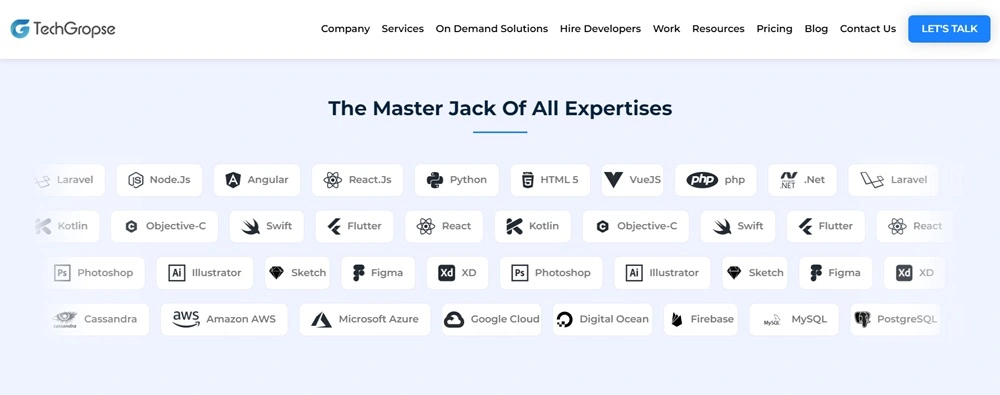
Techgropse – An application development company specializing in mobile-first products with strong MENA regulatory awareness
Best for: Companies building mobile-first products in healthcare, fintech, or logistics that need regional market familiarity and can tolerate slightly slower response times.
Techgropse has built a position in the UAE market through mobile application development, with an expanding capability in blockchain and AI. Their notable work includes regulatory-aware product development for Saudi Enaya, which required navigating Islamic preference requirements and regional compliance standards – a useful signal for companies building for MENA audiences with cultural and regulatory specificity.
What clients consistently cite: Innovative technical approach and effective Agile delivery for well-defined mobile projects.
What to consider: Multiple client reviews mention slower response times, attributed to the team managing a high volume of simultaneous projects. If responsiveness and communication speed are critical to your working style, verify their current capacity and project load before committing.
Blink22 – An agile development shop catering to early-stage founders with unique partnership and equity models
Best for: Startups and founders who want a vendor willing to take equity in exchange for technical work, or who need dedicated post-launch support that many vendors deprioritize.
Blink22 occupies a specific and unusual position in the Dubai market: they offer partnership arrangements for early-stage founders, accepting equity in exchange for technical development. This model aligns the vendor’s incentive with the startup’s success rather than with billing hours – which changes the nature of the working relationship.
They have delivered products including Noory, an Arabic-language AI children’s library app that demonstrates both Arabic language capability and AI feature integration. Clutch has recognized them as top Flutter developer in Dubai.
What clients consistently cite: High-quality deliverables and dedicated post-launch support – the latter being an area where many Dubai-based vendors are weak.
What to consider: Client reviews note that Blink22 could take a more proactive consulting role earlier in the project. If you need strategic input on what to build, not just execution support, supplement their engagement accordingly.
Fingent – An enterprise software developer focusing entirely on ISO-certified, mission-critical reliability
Best for: Enterprises in regulated industries that require ISO-certified delivery, mission-critical reliability, and a vendor with verifiable quality processes.
Fingent delivers mission-critical software for enterprises that cannot afford failures. This ISO 27001-certified company holds a perfect 5.0 rating across multiple client reviews, founded with a focus on quality in industries where reliability is non-negotiable.
Their Dubai Silicon Oasis presence, combined with Arabic support and RTL design capability, positions them well for companies building products for UAE-based users with local compliance and language requirements.
What clients consistently cite: Flawless execution, strong commitment to bug-free delivery, and genuine reliability across long-term engagements.
What to consider: Fingent’s quality-first approach means they are not the fastest vendor in the market. If your primary constraint is speeding to launch rather than risk reduction, a more agile vendor may serve your immediate needs better.
Zoondia – A multinational custom software provider serving Gulf SMEs with integrated emerging technologies
Best for: SMEs and enterprises in the Gulf region that need embedded AI, IoT, or blockchain capability alongside conventional custom development, with immediate regional support availability.
Zoondia operates offices across India, the US, Qatar, and Dubai, which gives them practical regional support capability that purely remote vendors cannot match. Their technical differentiation is in emerging technology integration (IoT, AI, blockchain, RPA, and AR/VR) alongside conventional custom development.
What clients consistently cite: Optimized QA and testing processes that multiple clients rate as more rigorous than comparable vendors. Strong communication and responsive IT support.
What to consider: Zoondia’s development center is not in the UAE, which creates the same time zone considerations as any offshore vendor. Their Dubai and Qatar offices handle client management and support rather than engineering delivery.
Conclusion: How to make your final choice
The Dubai software development market in 2026 is deeper and more capable than ever. The challenge for CTOs and founders is not finding a vendor. It is distinguishing between companies that market themselves identically.
None of the companies on this list are the perfect fit for every project. Before you sign a contract, put your top two or three vendors through this final validation filter:
- Request industry-specific outcomes: Do not accept a general portfolio. Demand two case studies in your specific industry proving measurable outcomes (cost reduction, defect rates, user adoption).
- Ask the vendor for an example of disagreement: “Give me an example of a time you pushed back on a client’s plan.” A partner who simply agrees to build a flawed concept will drain your budget.
- Run a paid pilot: For enterprise projects, spend two weeks on a paid, scoped pilot (like an architecture review). This will tell you more about how a vendor actually communicates and writes code than a dozen reference calls.
Use these evaluation criteria before consulting the vendor list. Your constraints will dictate the questions you ask, and the answers you receive will clearly reveal which partner is equipped to build your software safely and at scale.