From a process standpoint, everything looks secure. But the uncomfortable reality is that many smart contracts that pass audits are still exploited, often shortly after deployment.
According to DeFi Llama, over $1.8 billion was stolen from audited DeFi protocols in 2023 alone, not from low quality projects, but from professionally reviewed ones.
This article will break down exactly why audited contracts still get exploited and what you should be doing after the audit to stay protected.
When does smart contract risk appear after an audit?
This type of risk tends to emerge at specific stages after a smart contract audit is completed.
- You’ve passed an audit and are preparing to launch
- Or you’re already live and handling real transactions
- And the audit report has become your main source of confidence
These aren’t three separate situations. They’re three stages of the same journey and most teams move through all of them without realizing the risk profile is shifting at each step.
This is where what we call the Audit Illusion takes root. Because a trusted third party approves your code, you feel less pressure to stay alert. The audit report says all big problems are fixed, so you feel safe and stop checking. But that confidence is the risk itself.
An audit only shows one moment in time. It isn’t ongoing safety. When you treat it as the end point, you put your team at risk.
In practice, this looks like: security reviews that stop after the report is delivered, monitoring that’s never set up because “the audit covered it,” and integration decisions made months later without revisiting whether the original assumptions still hold.
None of these feel like mistakes at the time. They feel like a team moving efficiently toward launch. But each one quietly widens the gap between what was reviewed and what’s actually running in production.
Real smart contract exploits that passed audits
The following cases show exactly how this plays out in real life. These cases are the most typical smart contract security incidents.
Beanstalk Farms – Business logic risk
- Audited → Exploited 2 months later
- Loss: $182 million
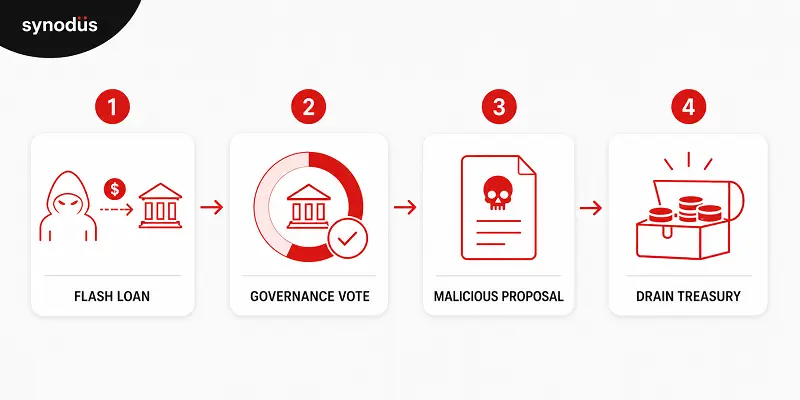
In 2022, an attacker flash-loaned $1 billion, used it to acquire 67% of governance voting power, and drained the entire treasury in a single transaction. The whole attack happened within one block, all before the system could response.
The audit firms can verify that the code executes correctly, but they can’t predict when someone with unlimited capital decides to play by them in the most extreme way possible. That kind of adversarial economic reasoning falls outside the standard audit scope.
bZx Exploit – Oracle manipulation risk
- Audited → Exploited within weeks of launch
- Loss: $8 million across two attacks
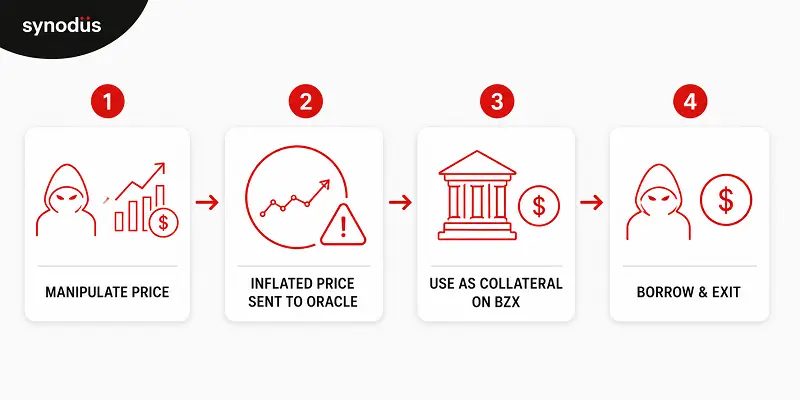
An attacker used a massive loan to artificially pump the price of an asset on one platform. They then immediately used that fake, inflated price as collateral on bZx to borrow millions of dollars and disappeared with the funds. The protocol trusted the price it was given and had no way to know it was being manipulated at that exact second.
In this case, the audit firms can’t predict or simulate live market conditions where someone with enough capital can “bend” reality by moving prices in a single transaction. The gap between what the code assumes to be true and what an attacker can make true is where the audit ends.
Ronin Bridge – Access control risk
- Audited → Exploited 10 months after launch
- Loss: $625 million
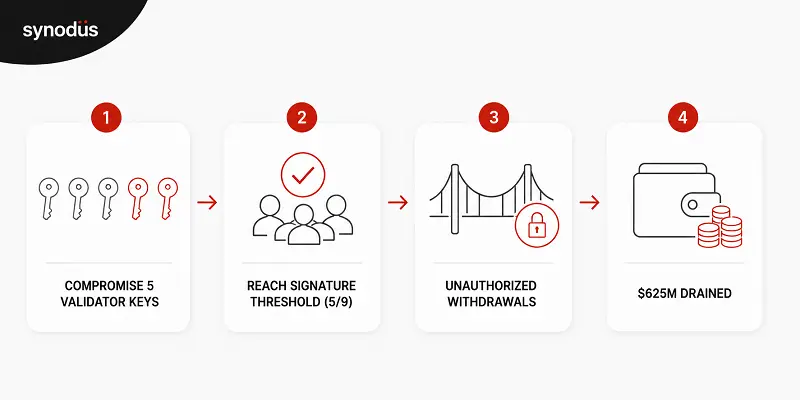
Hackers stole 5 validator keys – exactly the number needed to authorize withdrawals and drained $625 million from Ronin Bridge. The theft went undetected for 6 days, until a user reported they couldn’t withdraw their funds.
Auditors review the code as it exists during the audit. They cannot account for operational decisions or permission changes made months later in the real world. This vulnerability didn’t exist in the codebase when it was checked; it was created by human management after the audit was long over.
Cream Finance – cross-contract & integration bugs
- Audited → Exploited after adding a new token integration
- Loss: $130 million
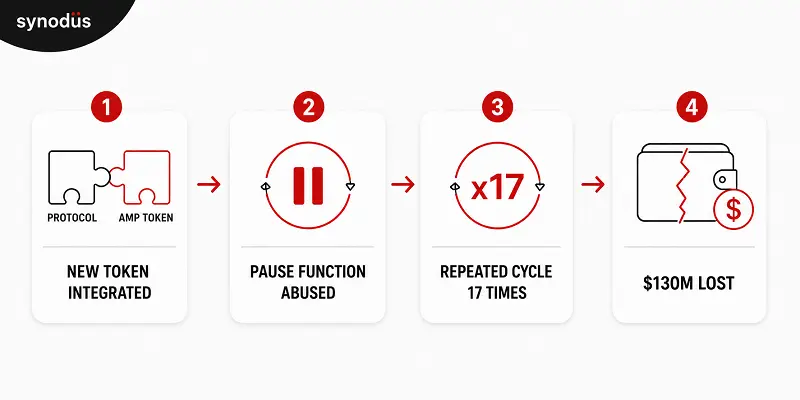
Cream Finance added a new token (AMP) to its platform. Both projects had been audited separately and were marked as “safe.” However, when combined, a specific feature in the AMP token allowed an attacker to “pause” a transaction, borrow money, and then repeat the cycle 17 times before the system could update. This resulted in a $130 million loss.
Auditors usually check each contract separately, not how they might interact in real life. The problem only showed up when the two contracts worked together, which standard audits don’t usually test for.
The real cost of a smart contract exploit: Money, trust, and recovery
Imagine waking up to a Telegram full of messages. Your token is down 60%. Someone is posting the transaction hash on Twitter. Your team is on a call trying to understand what happened. The audit report is open in another tab – and it’s useless.
When a protocol is hacked, you can measure the money lost, but you can’t measure the loss of trust. Users pull out their money and don’t come back. Partners keep their distance. The token price drops, not just because of the hack, but because the team seems unsure.
Some projects never recover. Others reopen with fewer users and struggle for years.
With traditional software, you can fix bugs and move on. But smart contracts are different. Once a transaction is executed, it’s final. No one has the authority to reverse it, not the team that built the contract, not the auditors who reviewed it, not the platforms it runs on. The money moves, and it stays moved. By the time you figure out the problem, the money is already gone or stuck. Everything is public on-chain, so mistakes are permanent and visible to everyone.
That’s why it’s so important to spot problems early.
Warning signs your smart contract is still vulnerable after audit
After an audit, If you feel a kind of friction you can’t clearly define as follow, it can be the sign your smart contract are at risk. It often surfaces in patterns like these:
- You’re not fully confident in how edge cases behave. The main functions work, but unexpected inputs or odd scenarios coud cause problems, and that’s often where smart contract exploits happen. For example: your team knows the happy path works, but when someone asks “what happens if a user calls this function with a zero value?” – the answer is a pause, then a guess.
- The team hesitates to modify or extecd contract logic. When developers are afraid to touch existing code because they’re unsure what might break, that a warning sign. Good code should be clear enough to update confidently. For example: a simple request to add a new modifier turns into a two-day internal debate because no one is sure which flows it might affect – even though the contract passed its audit months ago.
- Interactions with exernal contracts feel difficult to reason about. If your team can’t easily follow what happens when your contract interacts with others, that’s a risk. DeFi’s flexibility is powerful, but unclear external interactions can create vulnerabilities. For example: when integrating a new token, the team assumes the behavior mirrors what they’ve used before – without verifying whether its specific implementation introduces any different execution patterns.
- You’ve seen similar audited projects get exploied, but can’t explain why. This is perhaps the most telling sign of all. If you don’t know what specifically protects your contract from the same class of vulnerability, then you don’t yet have that protecion, you just haven’t been attecked yet. For example: when the Cream Finance hack made headlines, the internal reaction was “that’s unfortunate” – not “let’s check if our token integrations have the same re-entrancy exposure.”
Individually, these signals may seem minor. But together, they point to something deeper: Risk still exists, just outside what was explicitly reviewed. A good starting point is knowing what tools exist to keep scanning after the audit is done.
Why smart contract audits don’t catch every risk
To sum up, the reason why smart contracts can still be exploited after audits came from three things that audits aren’t designed to catch.
It came from assumptions that broke under real-world conditions. From interactions between contracts that were never tested together. And from changes that happened months after the audit was done – new permissions, new integrations, new context that the original review never accounted for.
An audit tells you your contract was sound at a specific moment in time. It was never designed to tell you anything beyond that. And the risks that cause the most damage come from what changed after and that’s exactly what most teams never check.
The next piece gives you a practical framework for identifying those hidden risks – before an attacker finds them first.