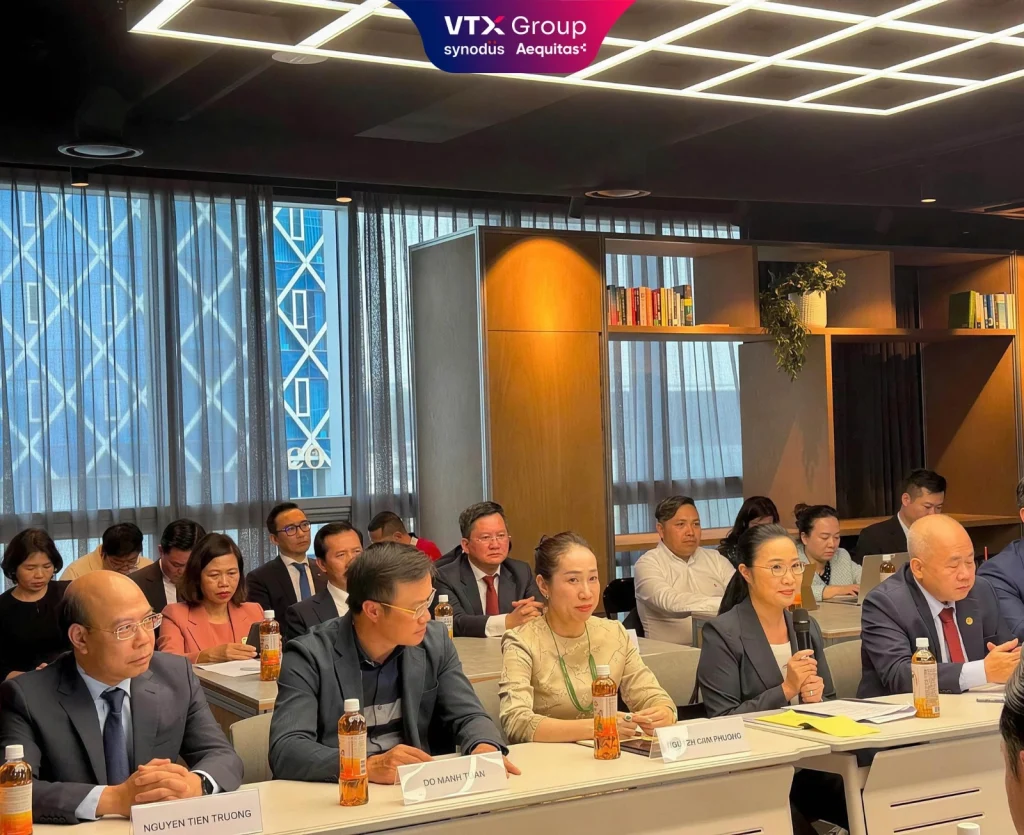
As the software engineering and digital transformation company within the VTX Group ecosystem, Synodus participated in this journey as part of a broader strategy to expand international partnerships, strengthen regional collaboration, and explore how emerging technologies are reshaping industries across Asia.
Over several days, the delegation met with leading Korean organizations in cloud computing, artificial intelligence, semiconductors, digital infrastructure, aerospace, and advanced technology systems.
On the surface, it was a series of business meetings.
In reality, it offered something more valuable: a firsthand view of where technology investment is moving, how regional ecosystems are evolving, and what opportunities are emerging for Vietnamese technology companies on the global stage.
One conclusion became clear throughout the trip.
The next phase of digital transformation will not be driven by individual technologies alone. It will be built through partnerships that combine infrastructure, software, domain expertise, and execution capability across multiple markets.
A strategic partnership with Megazone
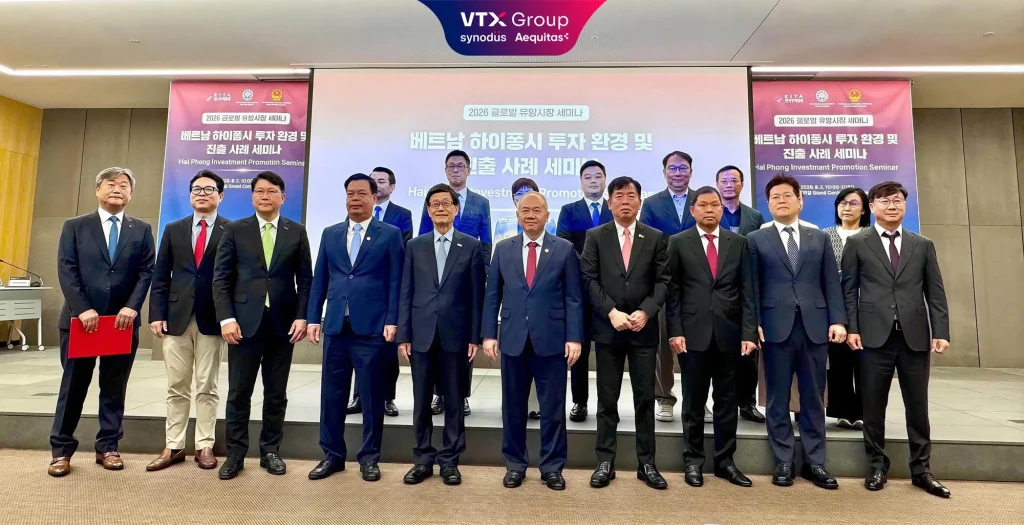
One of the key milestones of the visit was the signing of a Memorandum of Understanding (MOU) between Megazone, Saigontel, G-Group, and VTX Group on June 2nd.
The signing ceremony, witnessed by leaders of Hai Phong City, established a foundation for deeper collaboration in cloud computing, artificial intelligence, and digital transformation initiatives between Vietnam and South Korea.
Megazone is one of Korea’s leading cloud and AI companies, serving enterprises across multiple international markets and generating approximately USD 1.2 billion in annual revenue.
For Synodus and the broader VTX ecosystem, the partnership represents more than a business agreement.
It creates opportunities to combine Korean technology expertise with Vietnamese delivery capabilities to develop solutions for government agencies, healthcare providers, financial institutions, and other organizations operating in highly regulated environments.
As enterprise transformation projects become larger and more complex, partnerships like this increasingly determine how quickly organizations can move from strategy to execution.
The infrastructure behind the AI boom
Much of today’s AI conversation focuses on applications, copilots, and large language models.
However, many of the companies we met were focused on a different layer entirely: the infrastructure required to make AI possible.
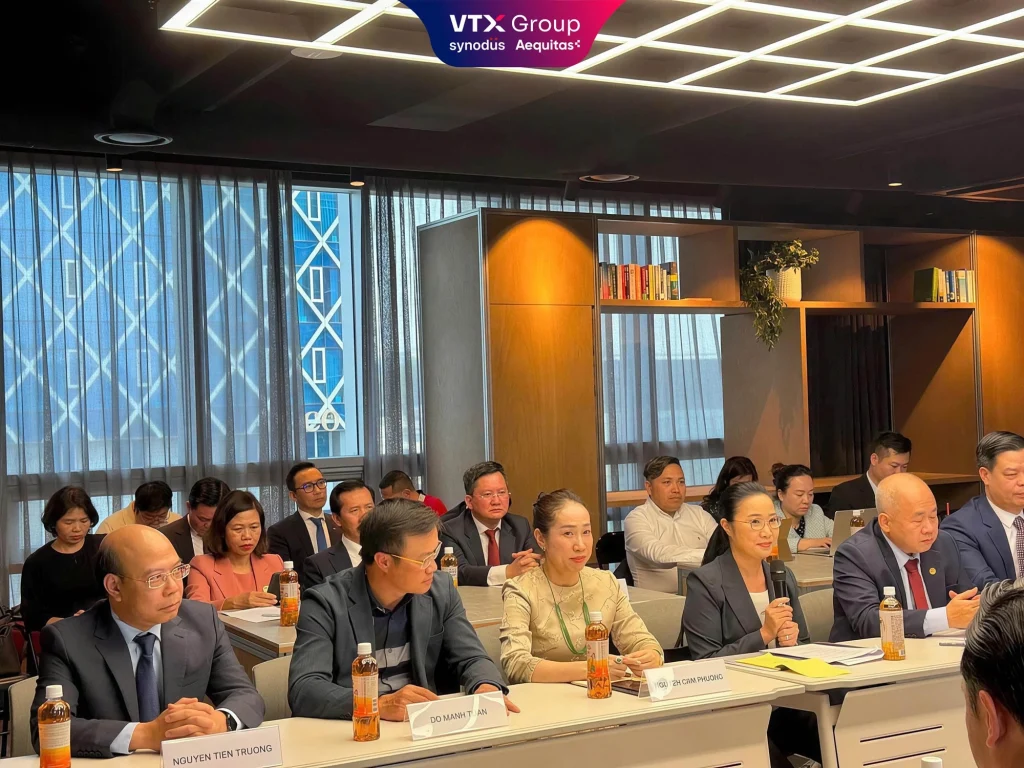
At Korea Technology & Future (KTNF), discussions centered around advanced server technologies and the infrastructure supporting large-scale government systems.
At FuriosaAI, one of Korea’s most promising semiconductor companies, the focus was on specialized AI chips designed for data centers and high-performance computing environments.
Together, these conversations highlighted an important reality.
AI is no longer simply a software story.
As organizations deploy AI at scale, infrastructure is becoming a strategic advantage. Computing power, cloud capacity, semiconductor innovation, and data sovereignty are increasingly shaping which organizations can compete effectively in the next decade.
For technology leaders, the challenge is shifting from “How do we use AI?” to “How do we build the foundation required to scale it safely and sustainably?”
Beyond software: UAVs, aerospace, and advanced systems
The visit also expanded beyond traditional software and infrastructure discussions.
Together with Saigontel, VTX Group met with Pablo Air, a pioneer in drone and unmanned aerial vehicle (UAV) technologies. Discussions explored how UAV solutions could support urban management, logistics operations, agriculture, and infrastructure monitoring in Vietnam.
The delegation also visited Hanwha Systems, part of the Hanwha Group, one of South Korea’s largest industrial and technology conglomerates. Hanwha Systems develops advanced solutions across aerospace, defense electronics, and intelligent systems, serving both domestic and international markets.
The final stop was LIG Group, one of Korea’s leading defense technology organizations, where discussions focused on future opportunities in advanced technologies and digital transformation.
While these companies operate in different industries, they share a common characteristic.
They are building technologies that sit at the intersection of software, hardware, data, and national-scale infrastructure.
This convergence is increasingly shaping how governments and enterprises think about resilience, security, and long-term competitiveness.
Three strategic observations
Across every meeting, three broader themes consistently emerged.
1. AI infrastructure is becoming as important as AI software
The market conversation often focuses on models and applications.
Yet many of the largest investments are flowing into the infrastructure layer: cloud platforms, semiconductors, computing systems, and data infrastructure.
Organizations that control these foundations will have a significant advantage as AI adoption continues to accelerate.
2. Regional technology ecosystems are becoming more interconnected
Korean companies are increasingly looking beyond their domestic market for growth opportunities.
At the same time, Southeast Asia continues to attract investment as digital transformation accelerates across both the public and private sectors.
Future innovation will increasingly depend on partnerships that connect technology expertise with local market execution.
3. Vietnamese technology companies are moving up the value chain
International partners are no longer looking solely for engineering capacity.
They are looking for organizations that can contribute domain expertise, delivery excellence, strategic thinking, and long-term partnership value.
For companies like Synodus, this creates opportunities to participate in larger technology ecosystems and support increasingly complex transformation initiatives across the region.
What this means for us
The trip reinforced two long-term priorities for both Synodus and the broader VTX Group ecosystem.
The first is strengthening partnerships that bring advanced capabilities in AI, cloud computing, semiconductors, digital infrastructure, and emerging technologies closer to organizations across Vietnam.
The second is expanding our international presence, particularly across South Korea and the wider Asia-Pacific region, by combining strong engineering capabilities with deep expertise in enterprise software delivery and digital transformation.
Rather than expanding internationally for the sake of growth alone, our focus remains on creating meaningful partnerships that generate long-term value for clients, partners, and communities.
Looking ahead
The conversations that began in South Korea are only the beginning.
The partnership with Megazone, alongside discussions with leaders across cloud computing, AI infrastructure, semiconductors, UAV technologies, and advanced systems, reinforces our belief that the future of innovation will be built through stronger regional collaboration.
As part of the VTX Group ecosystem, Synodus will continue investing in the partnerships, capabilities, and expertise required to help organizations navigate increasingly complex technology challenges.
Because the future will not be built by a single company, a single market, or a single technology.
It will be built by ecosystems working together.