As a leading national pediatric hospital caring for over 10,000 outpatients daily and 7,000 inpatients, our client faced a familiar challenge: fragmented data.
With more than 2,700 doctors and nurses working across separate HIS, LIS, and PACS systems, medical teams often lacked a unified view of patient information, especially in critical care.
When they came to us, their vision was to build a modern, connected EMR system that could unify their data, streamline daily workflows, and meet strict national legal requirements without causing a single minute of downtime for ongoing patient care.
The challenges we faced
Bringing the new EMR into a hospital already running on complex systems was not straightforward. The team had to solve several challenges along the way:
- Fragmented legacy systems: Existing HIS, LIS, and PACS systems operated separately. The new EMR had to connect with them without disrupting existing operations.
- High performance & reliability: The platform needed to handle up to 12,000 requests per second and 2,700 concurrent users, with 99.99% uptime.
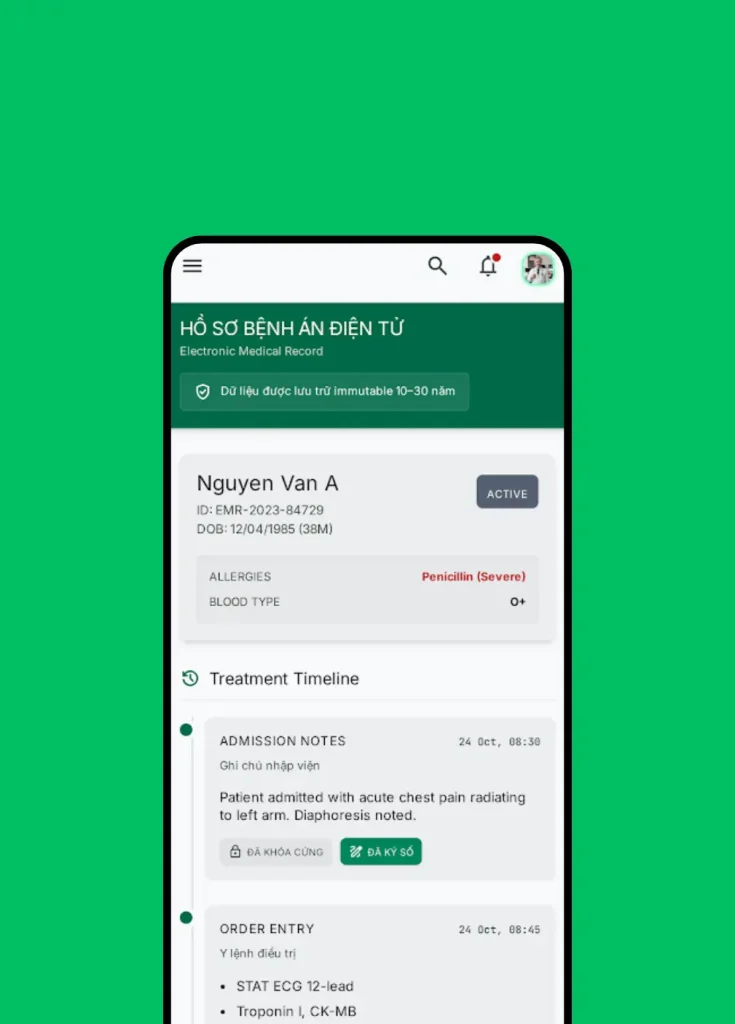
- Strict compliance & Data integrity: Medical records must be kept for 10-30 years and protected from unauthorized changes or deletion, including by database administrators.
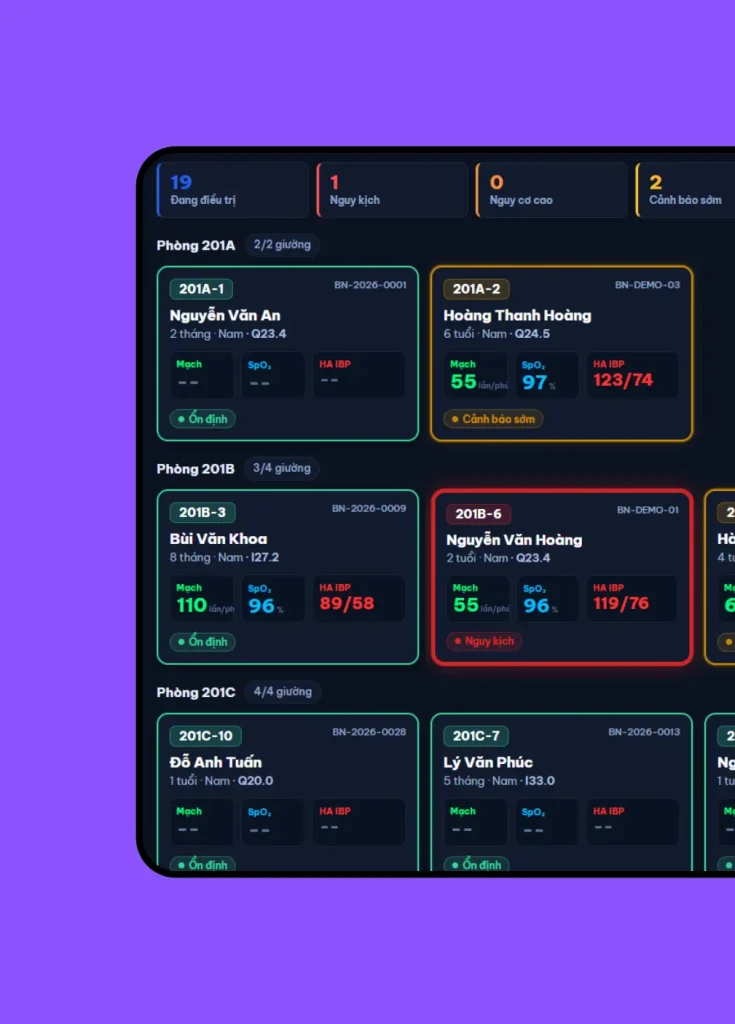
- Real-time ICU data: The system had to receive live data from bedside monitors, ventilators, and ECMO machines, where even small delays could affect patient safety.
- Flexible workflows: Different departments use different forms and workflows, so the EMR needed to support customization without changing its core system.
Our solutions
To meet these demanding requirements, we engineered a cloud-native, microservices-based EMR platform optimized through an AI-First software development lifecycle.
Instead of traditional handoffs between BAs, Devs, and QAs, we adopt a Single-Owner Model powered by AI:
End-to-End Ownership – 1 domain specialist (BA/QA) owns a full module from business logic (SRS) to test cases.
AI Copilot – Using Claude AI, the module owner directly generates production-ready code and UI prototypes, eliminating traditional developer dependencies.
Lean Efficiency – Reduced cross-team friction and enabled a lean squad of 8 to build a national-scale EMR system with an 85–90% AI-code acceptance rate.
A modular architecture that connects everything
Around 20 microservices support core clinical functions, while an Integration Hub connects the EMR with existing HIS, LIS, and PACS systems without disrupting hospital operations.
Built for high availability
To keep the system reliable even under heavy workloads, the platform uses a highly available infrastructure with:
- Multi-node Kubernetes clusters
- Apache Kafka for reliable message processing
- PostgreSQL, Redis, and TimescaleDB for transactional and time-series data
- RPO ≤ 1 hour and RTO ≤ 4 hours for disaster recovery
Bringing ICU data into the EMR in real time
For intensive care units, timely data can make a real difference. We built an IoT Gateway that connects directly to bedside monitors, ventilators, and ECMO machines, sending patient data into the EMR in real time.
Keeping medical records secure
Medical records need to remain accurate and tamper-proof for years. To achieve this, we combined digital signatures with MinIO S3 Object Lock.
Once a clinical document is signed and stored, it cannot be changed or deleted, even by database administrators.
Flexible workflows for every department
No two hospital departments work exactly the same way. The EMR uses configurable forms and medical standards such as ICD-10, SNOMED CT, and LOINC, allowing teams to adapt workflows without changing the core system.
The results
With AI-assisted tools supporting planning, development, and testing, we were able to move quickly while validating the platform against demanding hospital requirements.
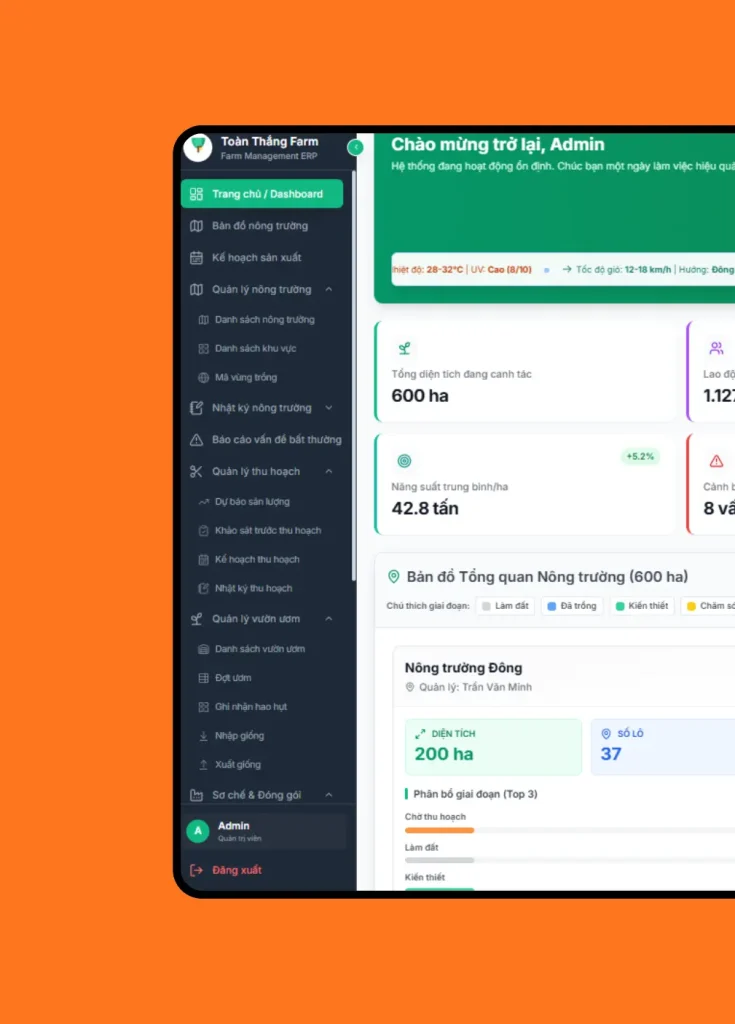
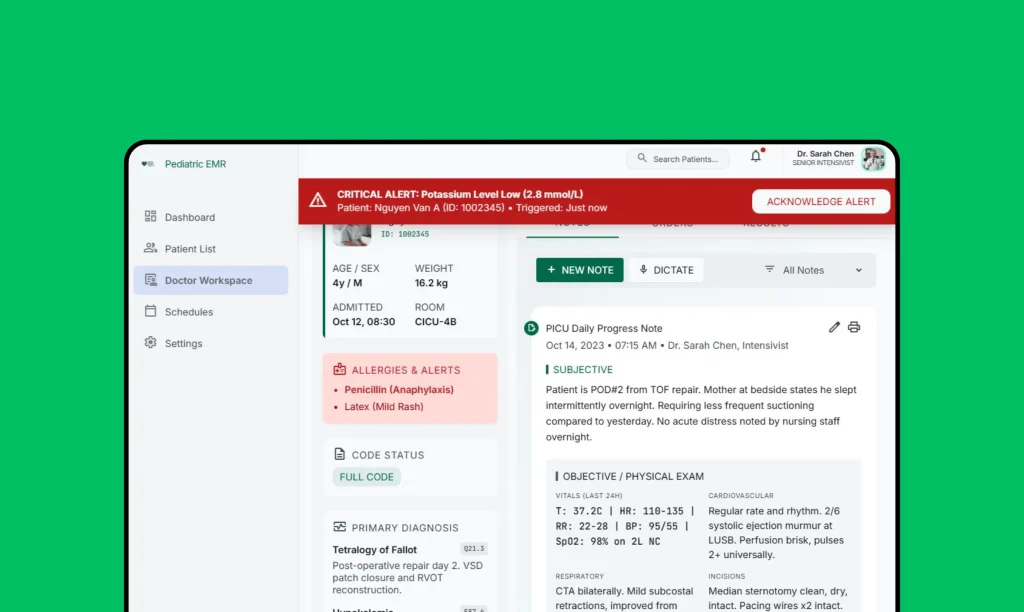
- One unified clinical experience: Designed Doctor and Nurse Workspaces that bring key patient information into one place.
- Proven performance: Validated the system for 10,000 daily consultations, 12,000 requests per second, and 2,700 concurrent users.
- Secure and compliant: Achieved compliance with national digital signature requirements and ensured clinical records remain immutable.
- Faster development: AI-assisted development helped validate 85–90% code efficiency in early core modules, enabling an 8-person engineering team to build the platform.
What’s next
The EMR journey is now moving from development into real-world use.
In September 2026, the platform will enter a pilot at the Pediatric Cardiovascular ICU, running alongside Smart ICU. From October to December, it will gradually expand across other departments and specialties.
Looking ahead, the platform will evolve into a multi-tenant SaaS solution, making it easier to bring the EMR to other healthcare institutions. This is just the beginning of a more connected and scalable approach to digital healthcare.
And if you are looking to modernize your healthcare systems, talk to our team.
How useful was this post?
Click on a star to rate it!
Average rating / 5. Vote count:
No votes so far! Be the first to rate this post.