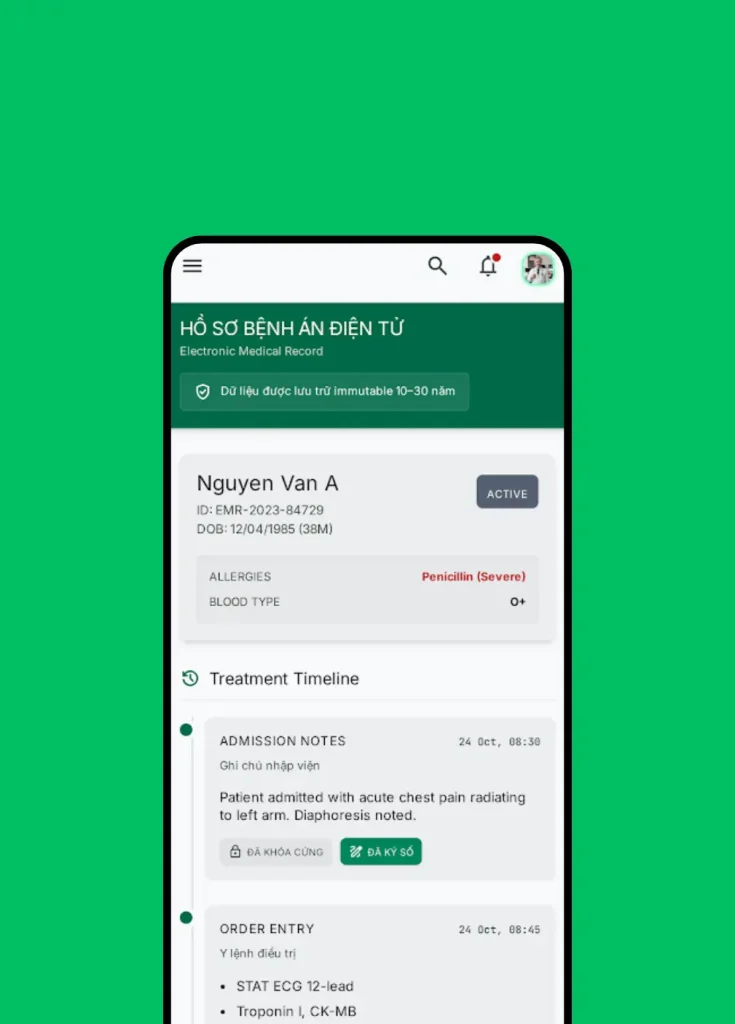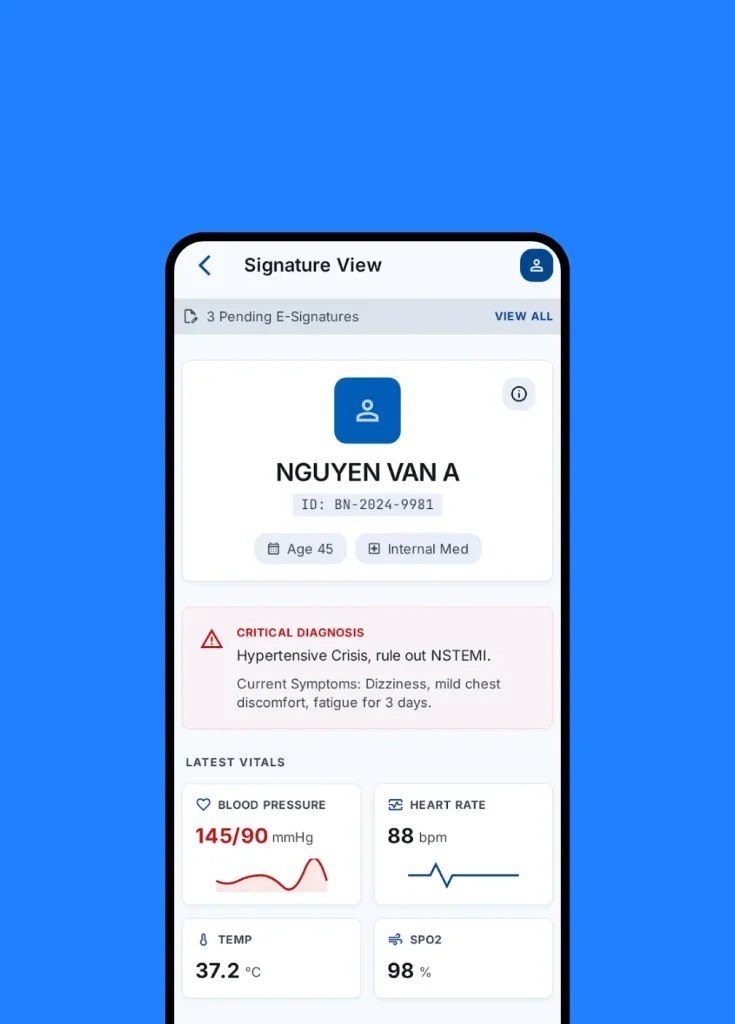
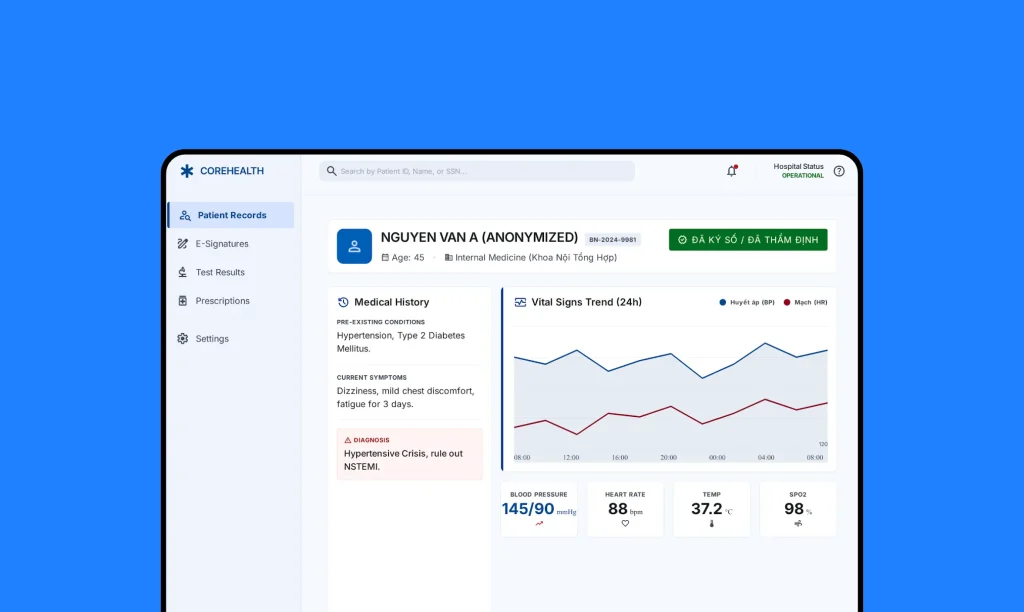
Across Vietnam, hospitals are moving quickly to digitize healthcare records and replace paper files with Electronic Medical Records (EMR). For our client, a traditional medicine and rehabilitation hospital, this was more than a technology upgrade. The hospital needed to meet a strict regulatory requirement and be ready for an official assessment by a fixed deadline.
The hospital’s leadership wanted to modernize daily operations, reduce paperwork, and make patient information easier to manage. To make that happen, they turned to us for a solution that could be deployed quickly, meet the required standards, and fit into existing medical workflows.
The 26-day challenge
The project had three key challenges:
- An extremely tight timeline: The hospital had only 26 days from the initial kickoff meeting to the final official evaluation, making speed a critical factor from day one.
- Strict regulatory standards: The EMR system needed to provide all required functionality while complying with national healthcare standards.
- Complex coordination: The implementation required close collaboration between hospital staff, our team, and official assessment authorities, with issues needing to be resolved quickly along the way.
How we made it work
With the deadline already set, we focused on keeping the implementation practical, fast, and closely coordinated.
Rather than developing an EMR system from scratch, we provided a turnkey EMR platform that was already designed to support hospital operations and meet relevant requirements. This gave the team a strong starting point and allowed valuable time to be spent on implementation and preparation rather than core development.
From there, the team broke the tight timeline into clear daily milestones, prioritizing the essential functions needed for the hospital’s operations and official assessment. This helped the team identify gaps early and address them before they became last-minute blockers.
At the same time, we maintained close communication across all parties involved. Doctors and hospital staff received hands-on support as they adapted to the new workflows, while the technical team worked directly with the relevant stakeholders to resolve operational or technical issues on site.
The real impact
After the focused implementation, the hospital was ready for its official assessment, and successfully passed all required requirements.
The project delivered several important outcomes:
- Passed official assessment in 26 days: The EMR system was fully deployed and passed the official assessment within the original deadline.
- Smooth & stable operations: Doctors and nurses transitioned to digital records with minimal disruption to their daily workflows, while the hospital gained better control over patient data.
- A benchmark for fast EMR adoption: The project demonstrated how a regional public hospital could move to EMR quickly while maintaining operational and regulatory requirements.
The result was a smoother transition to digital medical records, giving the hospital a stronger foundation for more efficient and secure healthcare operations.
If you’re looking to move from paper-based records to a reliable, compliant EMR system without disrupting daily operations, our web app development team can help you plan and deliver the transition.
How useful was this post?
Click on a star to rate it!
Average rating / 5. Vote count:
No votes so far! Be the first to rate this post.