How much does a mobile app cost to develop?
Building a mobile app can cost anywhere from $5000 for an MVP to $500,000 for an enterprise-level one. It’s hard to give an exact number without knowing all the details and project scope.
Based on these average app development costs to see how much to prepare.
| Level | Features | Estimated time | Average cost |
|---|---|---|---|
| Simple | 5 to 15 pages. MVP or core functions only Basic UI | 1 – 2 months | $5,000 – $10,000 |
| Medium | 15 to 40 pages Complicated features Basic and customed UI Need simple integration | 2 – 6+ months | $20,000 – $70,000 |
| Complex | 50 pages+ Advanced features Multiple integration Entirely tailored UI based on branding May require a high level of security or integrate AI and data | 9 months – 1 year | $100,000+ |
If you want a more accurate estimation, read on for the app development cost breakdown and free calculator. And if the total cost is way out of your budget, we have a few tips to optimize it in the end.
Factors of an app development cost
Learn why the cost of your app is high and which factors to priority during development, as a way to trim the fat.
1. App platform
Building a mobile app, you can go between native, cross-platform, or web-based apps. Based on your specific needs, budget, and target audience, you can choose a suitable platform.
Native
The most common mobile systems are iOS and Android. The cost between the two of them is not much different, typically ranging from $70,000 to $250,000, depending on the project scope and developer rates.
However, native app development requires separate developers for each platform, which doubles the cost if you want both iOS and Android.
Cross-platform
If you want to reduce development costs, cross-platform can be a way.
Using frameworks like React Native, Flutter, or Xamarin allows you to build apps for both Android and iOS under one codebase. You can have a single team for both systems, yet your app performance might not be as strong as native one. Of course, this trade will lower costs, ranging from $50,000 to $200,000.
Web app
This is a more affordable approach than native and cross-platform. You can build web apps that work on browsers, removing the need to download them from a store. Since it’s easier to build, development cost can start at $20,000 for basic features and exceed $100,000 for complex ones.
Not just development cost, a web app also gets rid of store fee to promote and sell your app.
2. Numbers of screens and features
Of course, a complex app will have more screens and complexity. For example, a log-in screen is usually considered a simple and standard feature for a mobile app. But a payment portal takes more effort to build, as not every application requires it.
Here’s time and cost estimation for some basic features:
| Features | Function | Estimated time | Average cost |
|---|---|---|---|
| User login | Login with social media/ email address Option of forgot password/ log out | 10 – 20 hours | $500 – $1,000 |
| Profile completion | Add basic info/ photo Set region | 20 – 40 hours | $900 – $2,000 |
| Push notifications | Push notifications and reminders for users | 20 – 30 hours | $1,000 – $1,500 |
| Basic admin panel: User management | See list of users Create user Edit user Delete/block user | 40 – 60 hours | $2,500 – $3,000 |
Time and cost estimation for some complex features:
| Features | Function | Estimated time | Average cost |
|---|---|---|---|
| Messaging | Online/offline status Group chat Send documents and media files | 50 – 80 hours | $3,000 – $5,000 |
| Payments | Transaction history Check balance Add debit/credit card Payment gateways integration | 60 – 80 hours | $2,500 – $3,000 |
| Maps | Detect user’s location Set pickup and destination point | 80 – 100 hours | $3,000 – $4,000 |
| Calls | Audio calls Video calls List of contacts | 100 – 200 hours | $5,000 – $10,000 |
Additionally, if your app is designed to cater to a large user base, you will need a strong backend and database to support seamless data processing and scalability. It takes time and money to build, but ensure your app is high performing under heavy loads.
This is why internal-used apps are always cheaper to build than a commercial-used app. They have less features and a defined number of users.
3. Design scope
With nearly 9 million mobile apps worldwide, users nowadays are much more selective. They want an app that is not only high performed, secure and fast, but also an app that is easy to use. How many times have you deleted an app immediately after downloading because it’s not friendly, maze-like, and a bit outdated?
This is why companies are investing more and more in UX/UI. An aesthetically pleasing user interface combined with good user experience will enhance user engagement and further conversion.
How much does it cost to design an app? Here is the estimation of each stage:
| Design task | Estimated cost |
|---|---|
| UX design | $5,000+ (price is higher with user research) |
| UX writing | $50 – $200 per hour (depends on location) |
| UI design | $5,000 – $25,000 (depends on the number of pages) |
| Branding (logo, mood board, color scheme, brand mascot) | $2,500 – $10,000 |
If you want to add advanced elements such as animations, 3D, custom illustrations, etc., this will increase design complexity, development time, and of course, total costs. These elements not only demand specialized skills from designers but may also require advanced tools to develop, that’s why the budget raises significantly.
4. Development location
You can either work with an in-house team or outsourcing development entirely. Because of this, the final cost depends on which way you choose and where your team is located.
| In-house team | Outsourcing team | |
|---|---|---|
| Cost factor | Recruitment cost HR C&B Bonus cost Training, career development cost | Pay by hourly rate or fixed cost Team location (offshore, nearshore, onshore) |
| Pros | Full control A dedicated workforce that aligns with business goals Deeper understanding of scope, product, and market | Wide range of developers for any technical and level requests Cheaper cost Quick onboarding process Flexible to adjust team size |
| Cons | Long recruitment and onboarding. The risk of offboarding Higher costs Talent shortage | May not wield a strong market understanding Lack of control over project progress |
So how much does it cost to hire an app developer?
These are just an average estimate, hourly rate is influenced by location, programming language (Swift, Java, Kotlin, etc.), roles, and the developer’s experience and qualifications
| Region | Hourly rate | Quality rank (Hackerrank) |
|---|---|---|
| United States (USA) | $120 – $150 | 28 |
| United Kingdom (UK) | $100 – $120 | 29 |
| Australia | $80 – $100 | 19 |
| Western Europe | $80 – $100 | Highest 4 (Switzerland) |
| Eastern Europe | $50 – $80 | Highest 3 (Poland) |
| India | $15 – $50 | 31 |
| Vietnam | $20 – $50 | 23 |
| Singapore | $50 – $80 | 13 |
Breakdown of cost based on development phases
Another way to calculate mobile app development cost is through its phases. Learning with step requires the most budget will help you allocate the right amount and optimize budget if needed.
| Stage | Timeline | Cost | What you do |
|---|---|---|---|
| Research, Planning, Solution architect | 2 – 4 weeks | $3,000 – $10,000 | Defining target audience Analyzing competitors Assessing potential risks Choosing tech stack, setting up solution architect |
| UI/UX design | 4 – 8 weeks | $5,000 – $20,000 | Designing a mobile app’s user interface Creating layouts optimized for various devices and screen sizes Refine the design |
| Development | 12 – 20 weeks | $30,000 – $150,000 | Developing the core functionality Optimizing the code for better performance, speed, and security |
| Testing | 2 – 4 weeks | $5,000 – $20,000 | Resolving bugs and technical issues Verifying that all app functionalities operate properly |
| Maintenance | Ongoing | $1,000 – $5000+/month | Maintaining and regularly updating the mobile app Fixing bugs and improving performance to ensure an optimal user experience |
Hidden cost to be aware of
During the development process, certain things can arise that ask for more budget, other than the above-mentioned factors. These hidden app development costs aren’t immediately obvious but can significantly affect the total cost:
- Backend infrastructure: A strong backend is crucial for performance. This includes server hosting, database management, development tools, and other technical support. This cost is usually calculated in the hourly rate if you work with a vendor. But if you want to build an in-house team, remember to take it into account.
- Third-party service integration: Integrating with payment gateways or external apps can come with extra fees for licenses and usage.
- Security features: Certain industries will require a deeper level of security. This takes cost to apply for security certification, additional method to meet the security standard, extra tools and encryption. For example, a fintech app will need advanced data encryption, two-factor authentication, face ID features, etc compared to a personal note taking app.
- App store fees: Distributing an app via platforms like the App Store or Google Play involves submission, update, and hosting fees. There’s also a difference between these two platforms in commission, which is App Store charges 30% while Google Play takes 15% – 30%.
- Maintenance and updates: Post-launch support is essential, including bug fixes, server upkeep, and engineering time. Whether you hire an internal developer or continue working with a vendor, this cost is hard to estimate.
- Marketing: Promoting your app through ads and other channels can be a significant ongoing expense.
When budgeting for app development, it’s crucial to account for these hidden costs to gain a complete understanding of the total investment required
Examples: How much do these real-life apps cost to build?
1. For dating app like Tinder
If you want to build a geosocial networking and dating app, it will typically take around $40.000 to $80.000 with these features:
- Login pages with user authentication and authorization.
- User profile (fill and update information, add pictures, delete profile).
- In-app messaging.
- GPS location.
- Push notification.
- In-app purchases (advertising, integrate with payment gateway, security measure for during transaction).
- Data processing mechanism that connects matching profiles.
- Simple and user-friendly UI/UX with no complex elements.
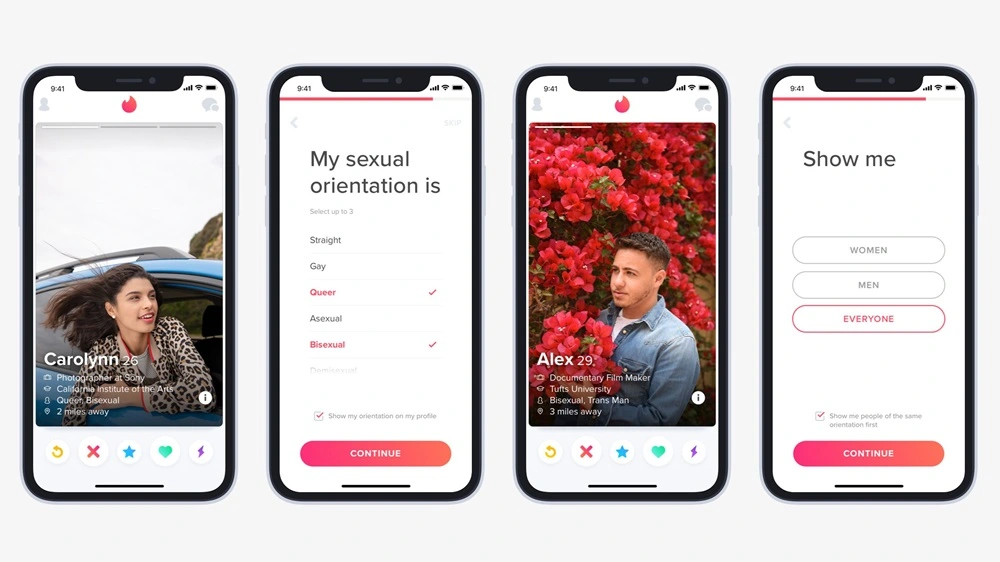
Tinder is a prime example of a good dating app, as it attracts millions of users and opens new opportunities for online dating.
2. For ridesharing app like Uber
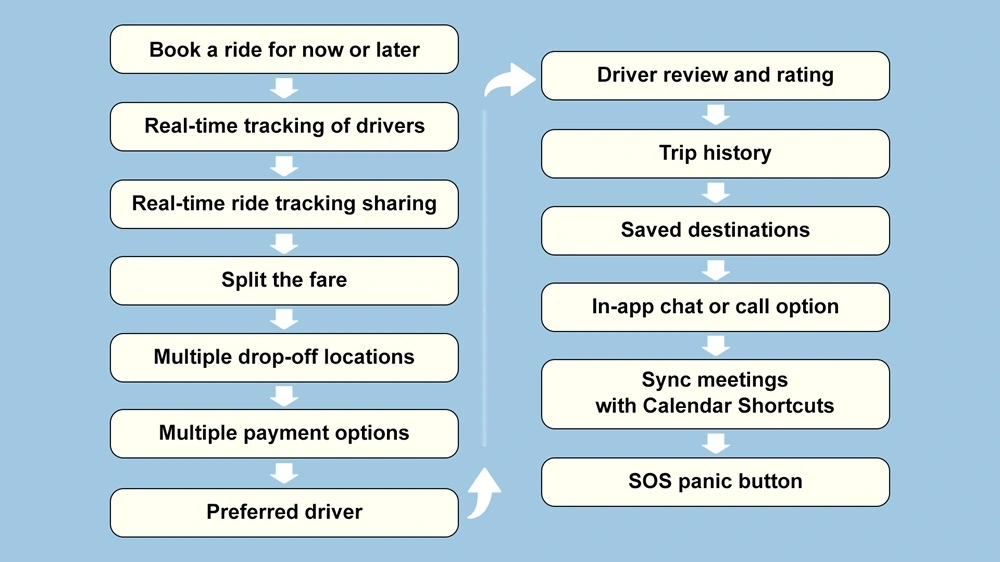
A ridesharing platform like Uber will connect users with nearby drivers to request rides quickly and conveniently. The company received its first funding of $510,000 and has since raised over $25 billion. To develop an Uber-like app, it typically costs up to $100,000 and requires approximately 1,200 hours.
3. For renting app like Airbnb
If you want to build an accommodation booking and sharing app like Airbnb, you will need to prepare around $60,000 to $90,000. However, Airbnb is a global app, a local renting app can be much cheaper.
For around $60,000, you can get these primary functionalities:
- Advanced search field: location, time, number of people, special requirements for the accommodation, price range selection.
- In-app chat.
- In-app payment (integrate with payment gateway).
- Review and ratings.
- Property listings.
- Online checking.
Thanks to our cost optimization approach, we have built a renting app like Airbnb at a much lower cost. Read on to see how we did it.
4. For social media app like X
There are many types of social media. For X, it’s a microblogging and social networking platform with less advanced features than Facebook or TikTok. However, it would still take at least $200,000 for a full-fledged one like X.
Essential features for functionality include:
- User profiles (Create, Edit, Delete) and log-in portals.
- Push notifications.
- Post publishing (Writing, sharing, liking, adding picture/video/gif,…)
- Find and connect with people.
- Search features.
- Creating ads feature.
Case study on how to optimize and reduce app development cost
During our 5 years of building mobile apps, here’s the method and tips we used to keep the development cost in control and even save up to 63% for our client.
1. Prioritize core feature first
It’s great if you have the budget to build everything at once, but it’s also okay to build what is important first and add everything else later. After getting your ideal features list based on market research, you can categorize the core and add-on based on:
- How important are they to your app? Can other features work without them?
- Does this feature represent your business’ USP?
How Synodus does it in real-life:
We use the Lean approach, in which the main idea is to reduce waste and prioritize what’s important, when building MVP and mobile apps for growing startups. First, we identify 3 to 5 core features, the supporting features (the one that enhance the core and USP offer), and the low-tier features (which can be added afterwards).
Second, we consider team size and UI/UX design to find anything that be saved upon. For example, in a project, we removed Product Owner and Quality Assurance roles, which saved up 30% of mobile app development cost for our clients.
This model has helped us deliver multiple MVPs in 3 days.
2. Reusing code
Instead of building from scratch, you can reuse certain code lines to skip a few steps and focus more on customization. This is how we cut down time and costs for our clients.
It’s like when you walk into a store and find a perfect suit. Yet it might be too large, and you want to add a few details to make it stand out more. The tailor works on it and makes a customed suit that fits you perfectly, without the need to make it from the start.
How Synodus does it in real-life:
We have developed many on-demand solutions in Fintech and Blockchain that skip through the base and jump right into customization. We also have a low-code solution that supports internal app development.
Reusing code has helped us save 63% of development cost while building a task management system for 2000 users from an enterprise.
3. Consider a hybrid method
Waterfall and Agile are the most common development methodologies. Yet, Agile can easily lead to cost overrun and deadline delays, while Waterfall projects usually take longer that increase the final cost.
Many companies, including Synodus, have been using both models to optimize mobile app development cost.
How Synodus does it in real-life:
We employ Agile for flexibility during iterative phases, and Waterfall for more control during development and deployment. This will balance the best of both worlds while minimizing their downsides. From there, the cost is in control and deadlines are ensured.
90% of app development projects in Synodus, including the ones above, are following this approach.
4. Involve analytics from the start
Neglecting this step will lead to more changes during development, hence more time to build and more cost to pay. By taking market, user, business and product analytics seriously, you can prevent interruptions and move faster to launch the app.
How Synodus does it in real-life:
During business analytics, we dive deep into the market dynamics and user expectation, combining it with industry knowledge to draw out difference scenarios on how user navigate and need from the app.
5. Find the right partner
Evaluating their technical expertise is one thing, you should also look into their partnership approach and way of working. Schedule direct discussions with them to learn their teamwork style, their mindset of doing business, and how they balance time-cost-quality.
Other ways to check a vendor’s credibility are:
- Use Clutch to read clients’ reviews on their performance.
- Scan their portfolio of relevant case studies.
- Ask for POC to learn their pitch.
At Synodus, we care for your business goals. We don’t just tailor apps based on your requirements, but also optimize your app development cost, deliver fast, and build with quality.
With over 250 IT experts on board, we are ready to support your projects, from startup products to enterprise-grade applications. Using the cost optimization model, global businesses including Fortune 500 brand name have entrust us to handle the task.
From commercial-used Blockchain, Fintech, Healthtech, Public sector app to internal-used app, it’s time to build 3x faster with up to 63% cost saved with Synodus.
FAQ on mobile app development cost
Yes. You can use free open-source and no-code tools to create a simple app. However, these come with limitations in customization, scalability, and advanced features. You can still pay for its paid version to access advanced features, which is very affordable compared to a fully customized one.
App maintenance usually costs around $1,000 – $10,000 annually. After the app is launched, continuous efforts are required to ensure it remains up to date, secure, bug-free, and working.
App developers in India take $15 to $60 per hour of work. A project can start at the lowest point of $5000 for MVP and web app. Depending on project scope and complexity, the final price can reach hundreds of thousands of dollars.
App developers in the Philippines take $25 to $60 per hour. However, they usually best at established technologies and small to mid-size projects, hence ranging from $10,000 to $80,000.
App development in Singapore is expensive due to high labor cost, which is around $50 to $80 per hour. They also work in many emerging and enterprise-grade projects, ranging from $50,000 to $150,000.
Vietnam is one of the best choices in outsourcing mobile app development to consider if you’re looking for a vendor which offers competitive rates for good quality and provides young and professional developers. This country also has a dynamic tech scene and a supportive government, which is very suitable for small to mid-size enterprises looking for a cost-effective solution. You can learn more about it here.
Wrapping up
Estimating mobile app development costs requires understanding factors like features, platforms, design, and development location. With budgets ranging widely, careful planning is crucial to balance cost-effectiveness and quality. By accounting for hidden expenses and exploring cost-saving strategies, you can create successful apps that meet both user needs and budget constraints.