What actually matters when evaluating a vendor
Many comparison sites focus on metrics like pricing, team size, or years of experience. In reality, these factors matter far less than choosing the right technical approach for your state.
Instead, you should focus on four key areas that directly impact performance, scalability, and long-term cost.
1. Matching engine performance
What to check
- Can the system handle real trading activity without delays?
- Does performance remain stable during peak market conditions?
Why it matters: if the system slows down under load, users will experience delayed trades and price slippage – which directly affects trust and trading volume.
How to decide
- If you’re targeting active traders → prioritize vendors with proven high-performance systems
- If you’re building an MVP → moderate performance is acceptable, but must be scalable later
2. Wallet security & architecture
What to check
- How are user funds stored and protected?
- Does the system support modern security approaches (e.g. distributed key management)?
Why it matters: Security issues in wallet infrastructure are one of the hardest and most expensive problems to fix after launch.
How to decide
- If you prioritize security and compliance → choose vendors with strong experience in secure asset management
- If you prioritize speed → simpler setups may help launch faster, but come with higher long-term risk
3. Liquidity & Trading experience
- Can the platform support smooth trading with sufficient liquidity?
- Is it easy to integrate with external liquidity providers if needed?
Why it matters: Even a well-built exchange will struggle if users cannot trade efficiently due to low liquidity.
How to decide
- If you already have liquidity partners → focus on integration capability
- If not → choose vendors who can support liquidity strategies or flexible integrations
4. Compliance & Scalability
What to check
- Does the system support user verification (KYC) and regulatory requirements?
- Can it scale to multiple markets over time?
Why it matters: Compliance issues can delay your launch or limit expansion, especially in regulated markets.
How to decide
- If you plan to operate in regulated regions → prioritize vendors with compliance experience
- If you’re testing an idea → you can start simpler, but should plan for future upgrades
Crypto exchange development companies: quick decision guide
Choosing the right vendor depends less on who is “best” and more on which company fits your specific use case.
The table below maps common scenarios to the most suitable development partners – based on performance, security, scalability, and time -to-market priorities.
| Use case | Recommended vendor | Why it fits | Key trade-off |
|---|---|---|---|
| Enterprise-grade exchange | OpenXcell | Strong in handling complex, large-scale systems | Higher cost, slower delivery |
| Strategy + development support | Solulab | Combines consulting with execution | Premium pricing |
| Fast MVP (3-4 months) | Synodus | Fast execution with senior-heavy team | Not optimized for large-scale systems |
| Custom architecture focus | Peiko | Strong engineering depth for tailored solutions | Longer development time |
| Flexible team scaling | Plavno | Adaptable resources for evolving projects | Requires strong project management |
| Web3/DeFi/Dex platforms | Codezeros | Specialized in decentralized systems | UX and performance may need optimization |
| Urgent launch (pre-token listing) | Synodus | Prioritizes speed and delivery under tight timelines | Requires scaling plan post-launch |
| Multi-tech ecosystem (AI + blockchain) | Calibraint | Broad technical capabilities | Less focused on exchange specialization |
| Budget-focused projects | Suffescom solutions Inc | Cost-effective entry point | Quality consistency may vary |
| Prototype/PoC validation | INC4 | Suitable for early-stage experimentation | Not production-ready |
Detailed breakdown of crypto exchange development companies
1. OpenXcell
A large-scale software development company with a structured delivery model, serving enterprise and mid-to-large projects across multiple industries.
Best fit & where they deliver the most value
OpenXcell is best suited for enterprise-level exchange platforms where system complexity and scalability outweigh the need for speed.
They deliver the most value in environments that require:
- Parallel development across multiple system components (trading engine, wallet, compliance layers)
- Structured execution across large, multi-phase projects
- Long-term scalability with clearly defined governance and processes
This makes them a strong fit for organizations prioritizing predictability, stability, and coordinated delivery across teams.
Where this model may not fit
- Slower iteration cycles: Changes require alignment across multiple teams, delaying feature releases – especially in fast-moving MVP stages
- Higher coordination overhead: Large delivery structures increase management complexity and cost
- Reduced flexibility early on: Processes are optimized for predictability, making rapid experimentation or pivots more difficult
Not ideal for teams aiming to launch quickly, iterate frequently, or optimize for early-stage cost efficiency
Synodus’s expert take: In practice, large-scale vendors perform best when requirements are clearly defined and execution must be predictable across multiple teams.
However, in exchange projects where time-to-market and architectural flexibility are critical, this model becomes less efficient – particularly during MVP and pre-launch phases, where leaner, senior-led teams often deliver faster outcomes with fewer coordination constraints.
2. Plavno
A software development company with a flexible delivery model, operating across Eastern Europe and Central Asia.
Best fit & where they deliver the most value
Plavno is best suited for projects where flexibility in team structure and resource allocation is a priority. They deliver the most value in environments that require:
- Scaling development teams up or down across different project stages
- Adapting to changing product requirements or unclear roadmaps
- Supporting ongoing development where scope evolves over time
This makes them a practical choice for companies that need adaptable execution rather than fixed, rigid delivery models.
Where this model may not fit
- Execution variability: Output quality and speed can vary depending on team composition and transitions Higher coordination demand: Requires strong client-side product ownership to maintain direction and consistency Less predictable timelines: Frequent adjustments in team structure can impact delivery continuity
Not ideal for founders expecting a fully managed, hands-off delivery.
Synodus’s expert take: In practice, flexible team models perform best when there is strong internal ownership guiding the product direction.
However, in exchange development – where architecture decisions and execution speed are tightly coupled – this model becomes less effective without a clearly defined technical roadmap, often leading to inconsistencies in delivery and longer iteration cycles.
3. Synodus
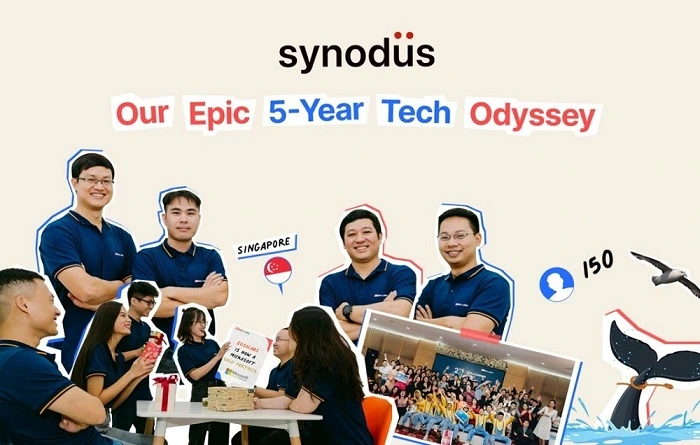
A blockchain and crypto exchange development company with a strong Southeast Asia presence, operating with a lean, senior-heavy team focused on high-performance trading systems and secure wallet infrastructure.
Best fit & where they deliver the most value
Synodus is best suited for projects where execution speed and architectural flexibility are critical.
They deliver the most value in environments that require:
- Launching MVPs under tight timelines (e.g. pre-token listing or early market entry)
- Building exchange systems that can evolve post-launch without heavy re-architecture
- Balancing performance, security, and cost efficiency in early-stage development – learn more about our Blockchain Development Services
This makes them particularly effective for startups and scale-ups navigating time-sensitive go-to-market phases.
Where this model may not fit
- Lean team structure: Enables faster execution, but may require scaling for large multi-module enterprise systems
- Less process-heavy: Agile workflows prioritize speed and adaptability over rigid governance
- Focused delivery scope: Optimized for execution efficiency rather than large-scale parallel development from day one
Not ideal for organizations requiring extensive multi-team coordination or highly formalized delivery structures from the start.
Synodus’s Expert Take: In exchange development, early-stage success is often constrained by execution speed rather than technical capability. Teams that can move quickly while keeping the architecture adaptable tend to reach market faster and avoid costly rebuilds as requirements evolve.
4. Solulab
A blockchain development company with a consulting-led delivery model, operating globally with strong presence in the US and India.
Best fit & where they deliver the most value
SoluLab is best suited for projects where product direction and technical architecture are not yet fully defined. They deliver the most value in environments that require:
- Strategic guidance alongside development execution
- Support in defining product roadmap, architecture, and feature scope
- Alignment between business objectives and technical implementation
This makes them a strong fit for founders or teams in the early stages of building a crypto exchange, where clarity and direction are still evolving.
Where this model may not fit
- Longer decision cycles: Strategic and consulting layers introduce additional validation steps before execution
- Higher overall cost: Combined consulting and development services increase total project investment
- Slower execution pace: Emphasis on planning and alignment can delay development timelines
Not ideal for teams with a clearly defined roadmap that prioritize fast execution and time-to-market
Synodus’s expert take: One common issue in exchange projects is over-investing in strategy when execution is the real bottleneck.
When product direction is already clear, extended planning phases can slow momentum – making execution-focused teams a more efficient choice in time-sensitive scenarios.
5. Peiko
A blockchain engineering company with a custom development model, primarily operating from Eastern Europe.
Best fit & where they deliver the most value
Peiko is best suited for projects where product differentiation and custom architecture are core priorities.
They deliver the most value in environments that require:
- Custom-built exchange systems with non-standard features
- Deep control over architecture and system design
- Flexibility to implement unique trading logic or workflows
This makes them a strong fit for products aiming to stand out rather than replicate existing exchange models.
Where this model may not fit
- Longer development timelines: Custom architecture requires more design, testing, and validation before launch
- Higher engineering complexity: Tailored systems increase long-term maintenance and optimization effort
- Delayed time-to-market: Building from scratch slows down initial product release
Not ideal for MVP-first strategies or projects with tight launch timelines
Synodus’s expert take:
Custom-built systems often deliver stronger differentiation – but they also extend development timelines. When speed-to-market is critical, this trade-off can delay traction, especially in competitive launch environments.
6. INC4
A blockchain development company with a prototype-focused delivery model, primarily operating from Eastern Europe.
Best fit & where they deliver the most value
INC4 is best suited for early-stage projects focused on validation and rapid prototyping.
They deliver the most value in environments that require:
- Quick proof-of-concept (PoC) development
- Testing product ideas before full-scale investment
- Lightweight systems for initial market validation
This makes them a practical choice for teams in the ideation or pre-product stage.
Where this model may not fit
- Limited scalability focus: Systems built for validation may require significant rework for production environments
- Narrower system scope: Less optimized for full-featured exchange platforms
- Short-term orientation: Focus is on speed of validation rather than long-term infrastructure
Not ideal for projects aiming to launch production-ready exchange platforms at scale
Synodus’s expert take: Prototype-focused development can accelerate early validation, but often shifts complexity to later stages. Without a clear path to scale, teams may face costly re-architecture when moving from PoC to production.
7. Suffescom Solutions Inc
A software development company offering blockchain solutions with a focus on cost-efficient delivery for startups and small-to-mid-sized projects.
Best fit & where they deliver the most value
Suffescom is best suited for projects where budget constraints are the primary consideration.
They deliver the most value in environments that require:
- Low-cost development for early-stage products
- Basic exchange functionality without heavy customization
- Faster setup with limited initial investment
This makes them a practical option for startups looking to minimize upfront costs during initial product validation.
Where this model may not fit
- Quality variability: Lower cost structures can lead to inconsistencies in output and system reliability
- Limited optimization depth: Systems may lack advanced performance tuning for high-frequency trading
- Higher long-term cost risk: Initial savings may result in rework or scaling challenges later
Not ideal for high-performance, security-critical, or large-scale exchange platforms
Synodus’s expert take: Lower upfront cost often shifts complexity to later stages of development. In exchange systems, performance and reliability issues tend to surface under real trading conditions – where early cost savings can turn into higher long-term trade-offs.
8. Debut Infotech
A blockchain development company with a template-based delivery model, primarily operating from India.
Best fit & where they deliver the most value
Debut Infotech is best suited for projects that prioritize fast setup and reduced development complexity.
They deliver the most value in environments that require:
- Rapid deployment using pre-built exchange frameworks
- Lower technical barriers for launching initial versions
- Simplified development with standardized features
This makes them a practical choice for teams aiming to launch quickly without building systems from scratch.
Where this model may not fit
- Limited customization: Template-based systems restrict flexibility in feature development and architecture
- Scalability constraints: Pre-built frameworks may not handle complex or high-volume trading scenarios
- Differentiation challenges: Harder to create unique product features compared to custom-built systems
Not ideal for projects requiring advanced customization or long-term scalability
Synodus’s expert take: Pre-built frameworks can significantly reduce time-to-market, but often limit how far a product can evolve. As requirements grow, teams may need to rebuild core components – especially when scalability or differentiation becomes a priority.
9. Calibraint
A technology solutions company offering blockchain development alongside AI and enterprise system integration.
Best fit & where they deliver the most value
Calibraint is best suited for projects that require blockchain to be integrated into a broader multi-technology ecosystem.
They deliver the most value in environments that require:
- Combining blockchain with AI, data systems, or enterprise platforms
- Building products that extend beyond pure exchange functionality
- Integrating multiple technologies into a unified system
This makes them a strong fit for organizations developing complex, multi-layered digital platforms.
Where this model may not fit
- Less specialization depth: Broad technology scope may reduce focus on exchange-specific optimization
- Higher integration complexity: Multi-system architecture increases coordination and technical challenges
- Slower execution speed: Broader scope can impact delivery timelines compared to focused vendors
Not ideal for blockchain-first, performance-critical exchange platforms
Synodus’s expert take: Multi-technology approaches add value at the ecosystem level, but can dilute focus on core system performance. In exchange development, where latency and reliability are critical, deeper specialization often has a greater impact than broader integration capabilities.
10. Codezeros
A Web3-focused development company specializing in decentralized applications and blockchain-native systems.
Best fit & where they deliver the most value
Codezeros is best suited for projects where decentralized architecture is core to the product.
They deliver the most value in environments that require:
- Building decentralized exchanges (DEX) or DeFi platforms
- Developing smart contract-driven trading systems
- Integrating token-based ecosystems and on-chain logic
This makes them a strong fit for blockchain-native products where on-chain execution is a fundamental requirement.
Where this model may not fit
- Performance limitations: On-chain execution introduces latency compared to centralized exchange systems
- User experience complexity: Blockchain interactions require additional UX layers, impacting usability
- Integration overhead: Combining on-chain and off-chain components increases system complexity
Not ideal for centralized exchanges requiring high-speed, low-latency trading environments
Synodus’s expert take: Decentralized architectures offer transparency and composability, but introduce trade-offs in performance and user experience. For products targeting high-frequency trading or mainstream adoption, these constraints often become a key bottleneck.
Conclusion
This expert evaluation highlights the top crypto exchange development companies based on real-worl capabilities and trade-offs.
Each vendor type has strengths and limitations – from large, structured teams to lean, fast-executing specialist.
Understanding these differences helps you align your choice with your project needs – without losing sight of the vendors’ comparative strengths showcased in this list. Once you’ve narrowed down a vendor type, the next step is mapping that choice against your budget, our crypto exchange development cost guide breaks down what each approach typically costs.