A vision that changed elderly care
As Australia’s population ages, the demand for better elderly care has never been greater. Our client, an Australian healthcare provider, saw a real problem that most monitoring systems were too invasive, making elderly people feel like patients to be tracked, rather than people who deserve warmth and genuine care.
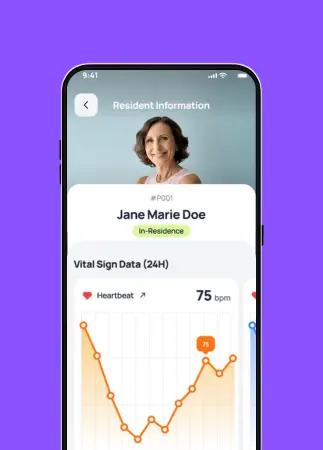
Their vision was bold. They wanted a Non-Invasive Vital Signs Monitoring System that tracks six critical metrics (Body Temp, Heart Rate, Respiratory Rate, Blood Pressure, SpO₂, and ECG), and detects falls with 98% accuracy. All without a single uncomfortable wire or sensor.
To bring that vision to life, Synodus joined as a strategic technical partner. In just 6 months, we built an ecosystem that monitors vital signs in real-time, detects falls accurately, and meets Australia’s strict data privacy standards.
The challenges we faced
Building this system wasn’t straightforward. The team had to navigate three main problems related to data loss, technical knowledge gap on the client side, and a constantly shifting project scope.
- The data integrity gap: IoT devices are commonly known for connectivity drops. For example, if the network flickers at the exact moment a device is sending heart rate data or a fall alert, that data can be lost forever. In healthcare, a few seconds of lost data is a missed life-saving alert.
- The technical language barrier: The client possessed strong expertise in aged care but lacked a background in software architecture. Therefore, it was difficult to translate medical needs into technical blueprints.
- The scope creep: Without a fixed technical baseline, the product’s direction was constantly shifting, putting the 6-month delivery timeline at risk.
How we handled it
Given these challenges, we took three key approaches from the start: consulting closely with the client through visual mockups and early workflow mapping, engineering a fail-safe ecosystem with automatic data retry so no vital sign is ever lost, and establishing a clear Change Request process to protect budget and timeline.
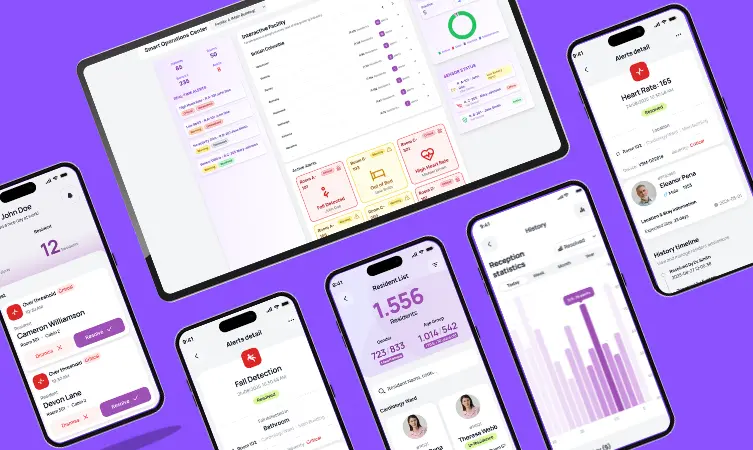
This laid the foundation for a four-pillar, end-to-end solution that handled everything from hardware (IoT), software (web & app) to security (Keycloak).
1. Centralized admin portal
Built for nursing home managers and senior staff, this web dashboard gives them a full picture of everything happening across their facility. They can see the status of every room, check whether any devices are running low on battery or not working properly, and review each resident’s health history over time. This helped them plan better long-term care.
2. IoT data ingestion platform
This is the brain of the system. It receives and processes millions of signals every second from connected health sensors. It filters out noise and inaccurate readings, keeping only reliable data. Most importantly, it runs smart algorithms to tell the difference between a real fall and a resident simply lying down quickly, a distinction that matters a lot in elderly care.
3. Cross-platform mobile application
One app but built for two groups of people. For nursing staff, it sends loud, immediate alerts the moment a fall is detected, so they can rush to help right away. For family members living far away, it provides daily health charts of their loved ones, giving them peace of mind knowing someone is always being watched over.
4. Scalable identity management with Keycloak
Keycloak acts as the gatekeeper of the entire system. It controls who can log in and what they are allowed to see. For example, a family member can only view their own relative’s data and cannot access anyone else’s.
Furthermore, Australia has strict health data privacy laws, and Keycloak ensures the system meets those standards by keeping sensitive information safe and the platform legally compliant.
What we delivered
Thanks to the agile execution and strict planning, we successfully reached the finish line:
- On-time delivery: The core ecosystem (Web, Mobile, and IoT) was launched within the 6-month window, ensuring phase 1 completion.
- Absolute compliance: The system fully adheres to Australian Data Privacy standards, a non-negotiable requirement for the local market.
- Integration sucess: The data pipeline for all 6 vital signs is live, preparing the infrastructure for the upcoming 98%-accuracy AI fall detection integration.
Our road ahead
While the monitoring system is now live and starts supporting daily care, our work continues. We are currently moving into Phase 2.
The focus now shifts to expanding 3rd-party integrations and testing new hardware sensors. Our goal is to keep pushing the boundaries of what non-invasive technology can do for the safety of Australia’s elderly community.
If you are looking for a partner to help navigate the complexities of digital healthcare, we’re ready to help you build what’s next.
How useful was this post?
Click on a star to rate it!
Average rating / 5. Vote count:
No votes so far! Be the first to rate this post.